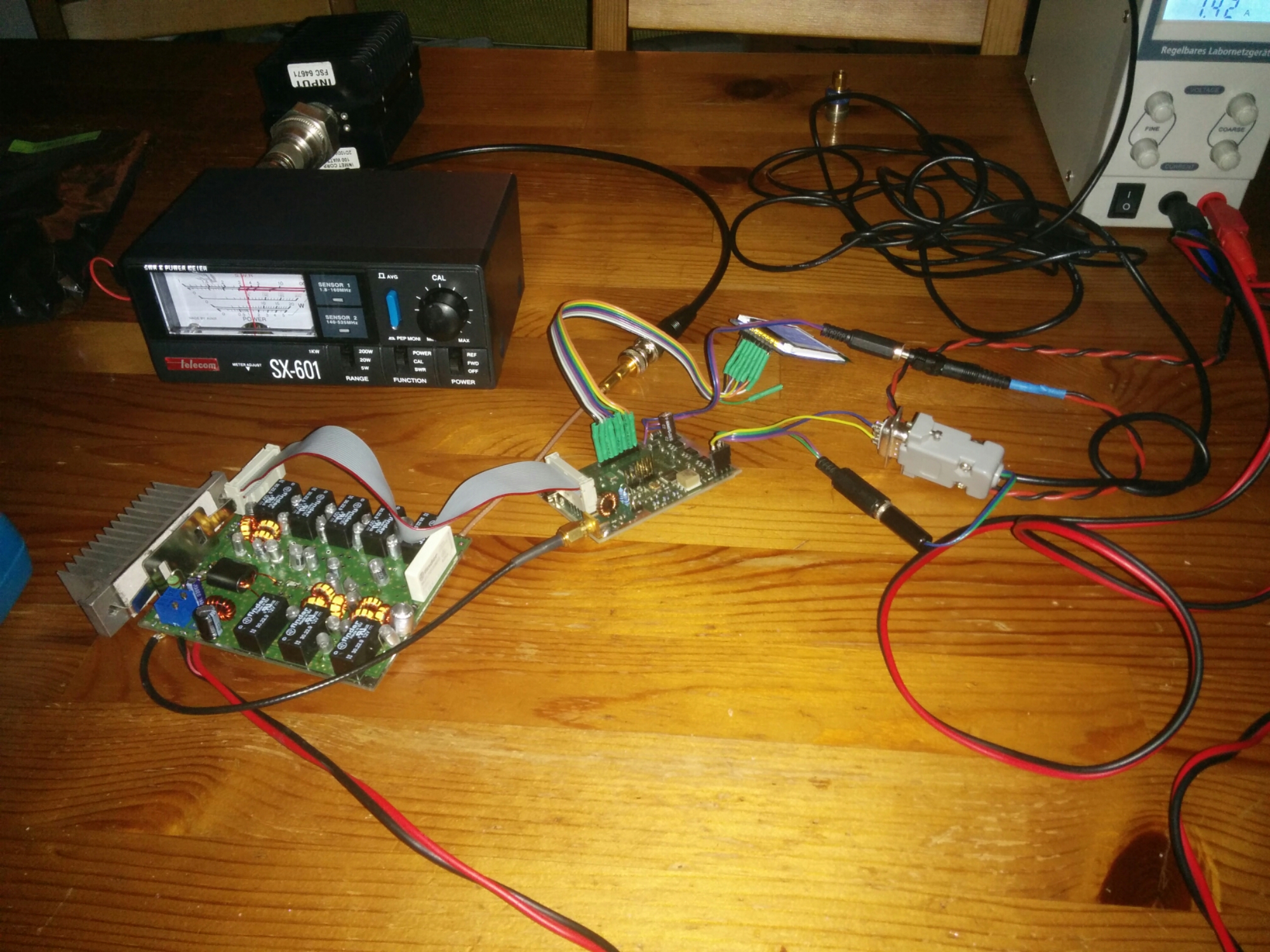
IC-E92 spectrum

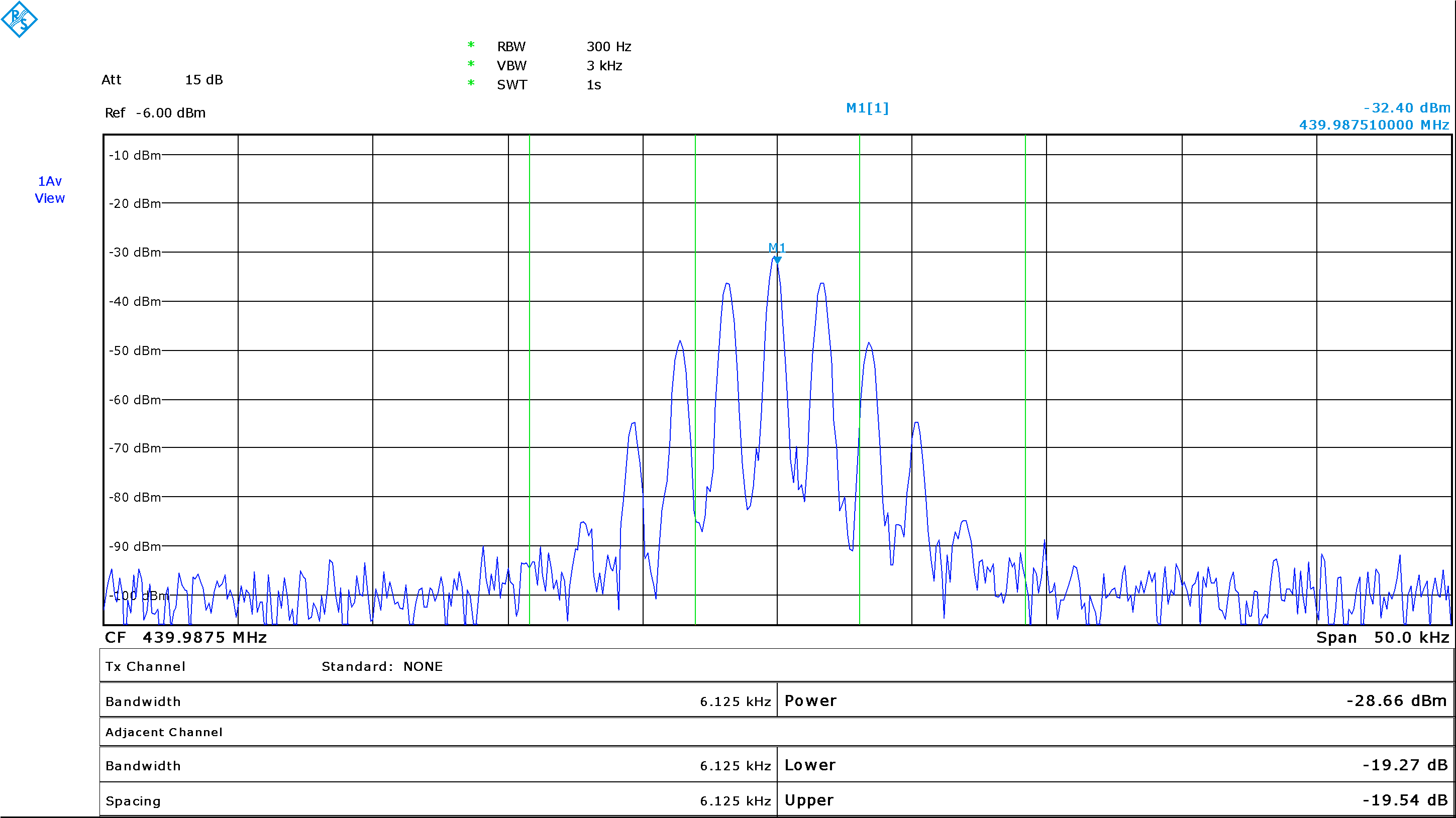
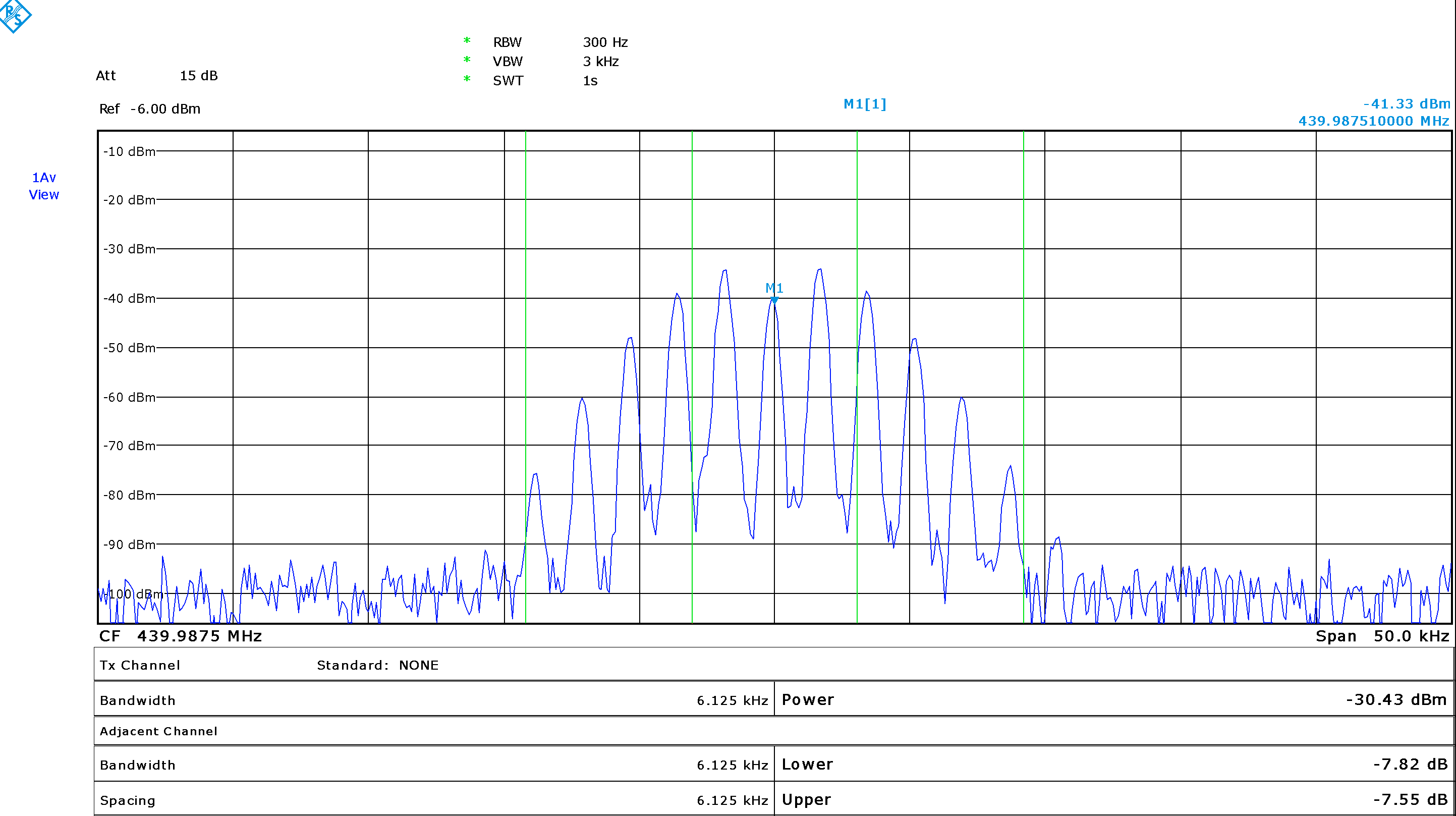
Triggered by some forum discussion about interference risk of operating repeaters in neighbor channels in 6.125kHz channels I was curious about the TX spectrum of my IC-E92. The measurement was done radiated. I checked for neighbor channel interference. You can see the delta values bottom right.

FM wide:

IC-E92 FM wide 1750Hz

IC-E92 FM wide 1750Hz

FM narrow:

IC-E92 FM narrow 1750Hz

IC-E92 FM narrow 1750Hz

D-Star (only half span screenshot):

IC-E92 D-Star

IC-E92 D-Star

You can see that D-Star is really the most narrow band mode. Using neighbor frequencies at close QTH still cannot be suggested but at least the interference will be less than for narrow band FM.

Pipe cap filter for 6cm

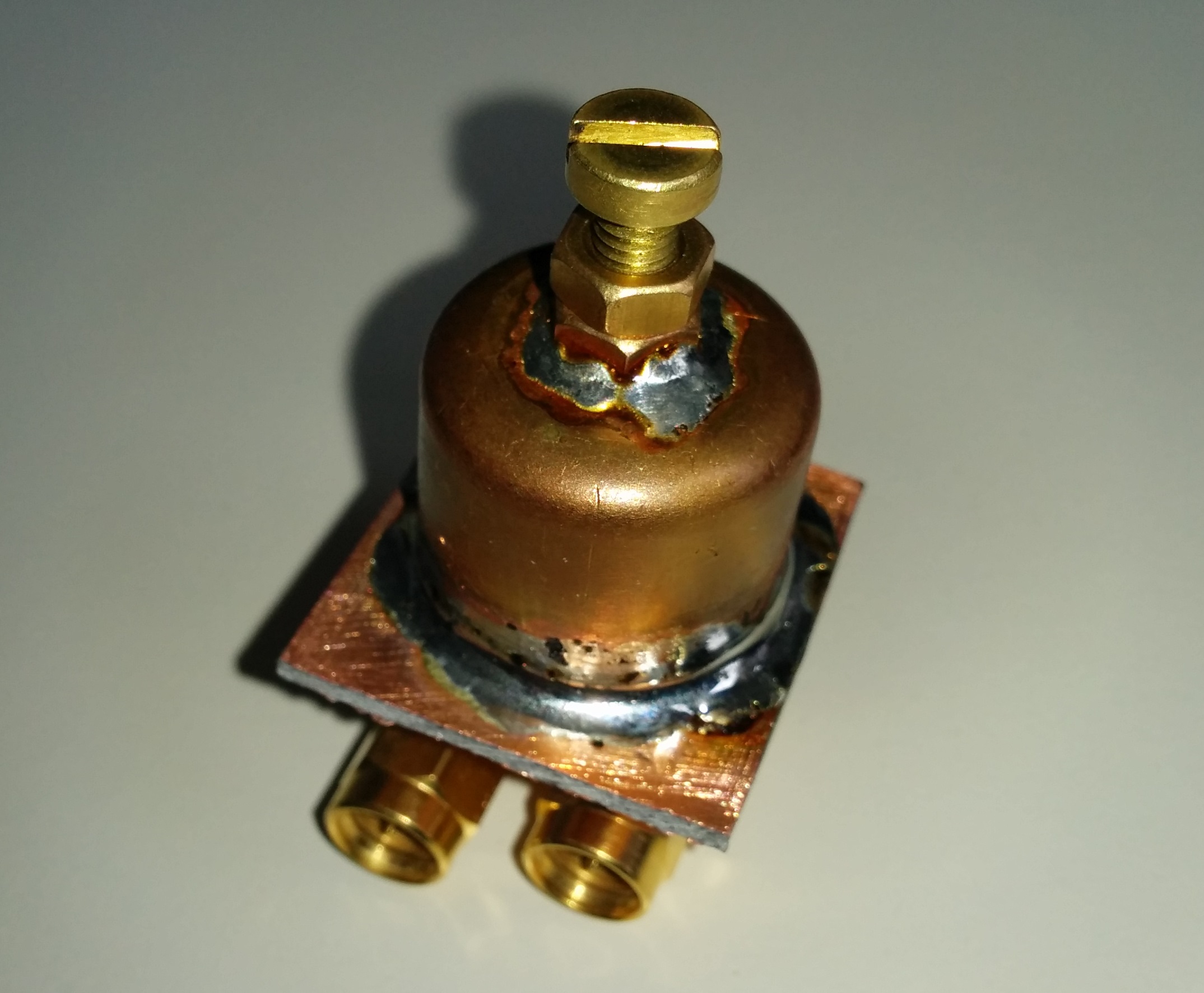
The picture shows a pipe cap filter experiment for 6cm. The 3/4″ pipe cap filter can be tuned between about 3.4GHz and 13GHz (see below).
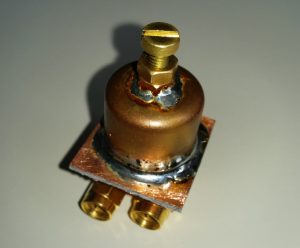
Pipe cap filter for 3.4 to 13GHz range

Pipe cap filter for 3.4 to 6GHz range

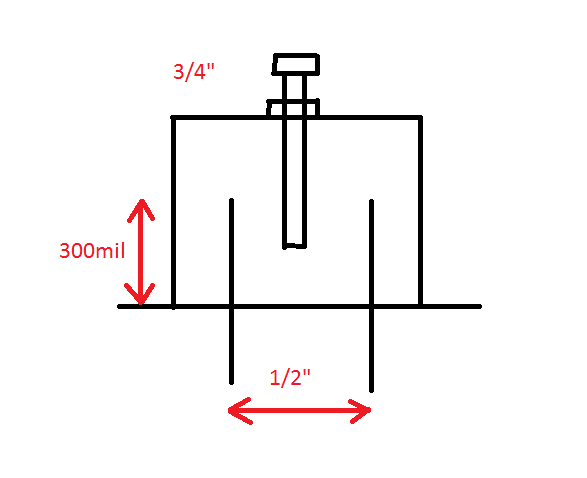
The filter shown here approximately looks like that (screw is M4, 4mm diameter type):
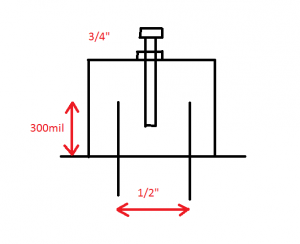
pipecap filter example for 6cm

pipecap filter example for 6cm

Some nice paper about constructions of pipe cap filters can be found at W1GHZ.
http://www.w1ghz.org/filter/Pipe-cap_Filters_Revisited.pdf

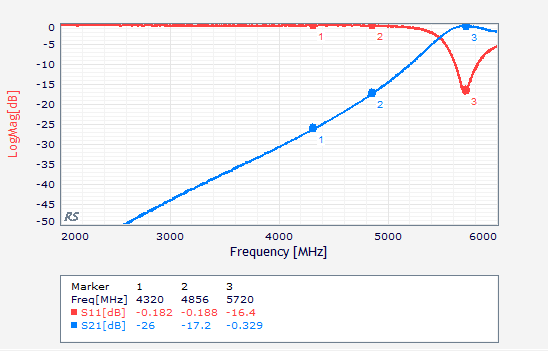
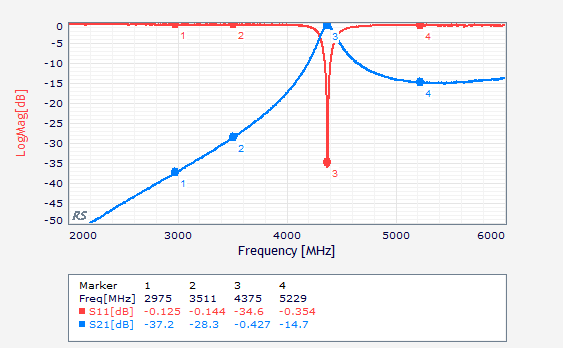
The measurements show about 0.4dB insertion loss. Do not expect to much suppression. As a simple RX image reject filter or for multipliers its certainly a good option.
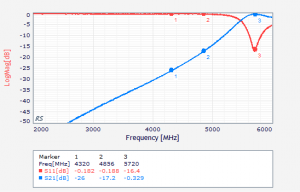
S-Parameter for filter tuned to 5720MHz

S-Parameter for filter tuned to 5720MHz

However for my construction it seems that the rejection above the tuned frequency is not very good. According to the paper of Paul it seems i have choosen for too long probes.
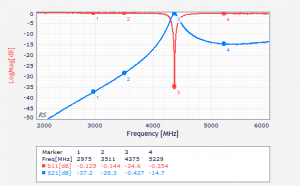
S-Parameter for filter tuned to 4375MHz

S-Parameter for filter tuned to 4375MHz

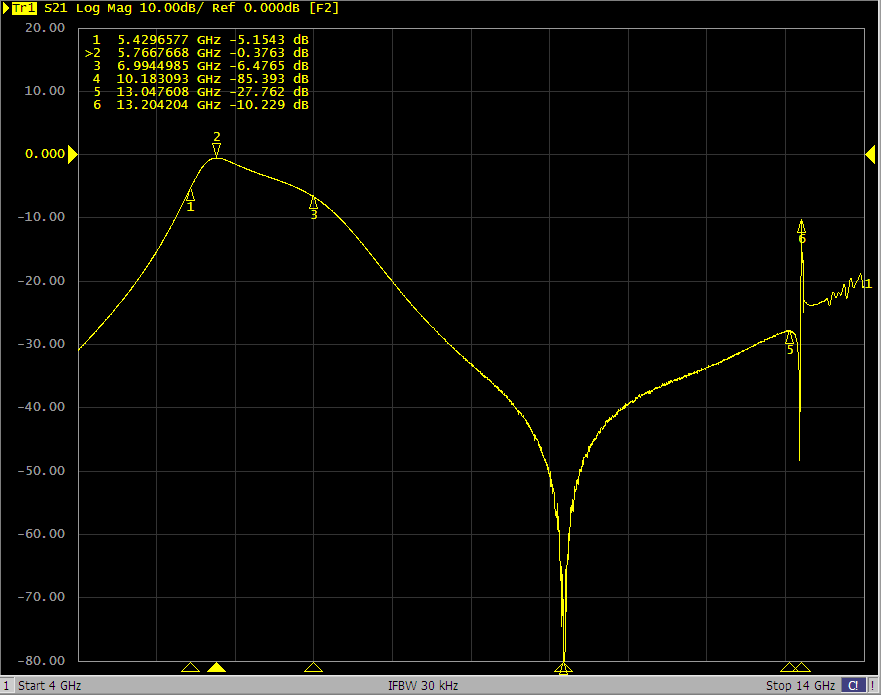
[Update1 – wideband measurement]
DL2MRE provided some extended measurement of the filter up to 14GHz.
I have to say, that it looks better than i thought. I was expecting worse suppression at high frequencies due to radiation but it is ok. The resonance at about 13GHz might come from the 90degree SMA connectors. However the bandwith is rather large and has an unexpected shape. Might be some parasitic effect ? Thanks to Marcel !
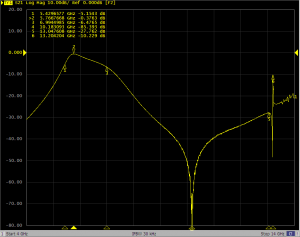
pipe cap 6cm wide measurement 4-14GHz

pipe cap 6cm wide measurement 4-14GHz

[Update2 – unwanted response and tuning range]
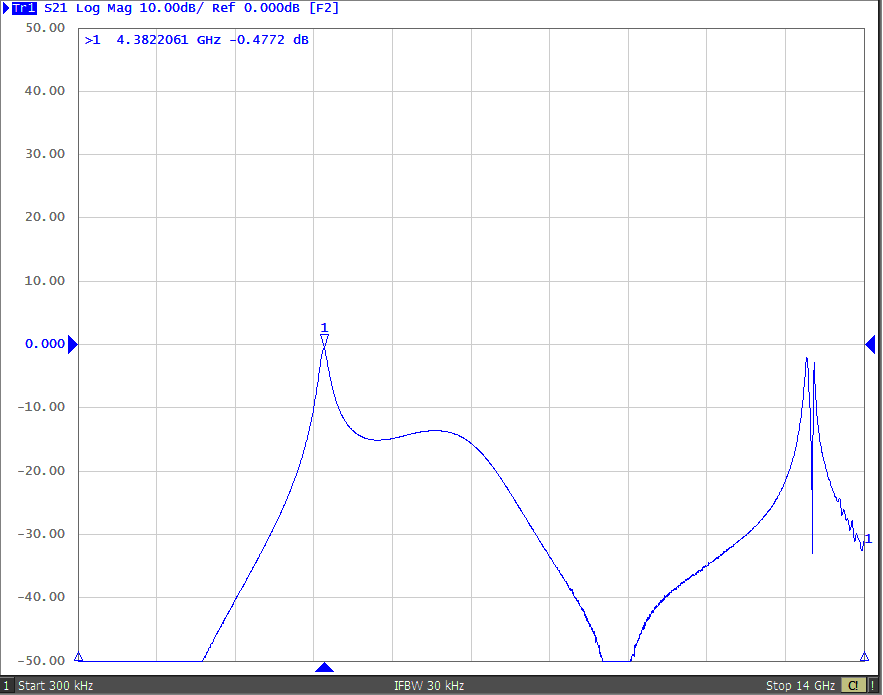
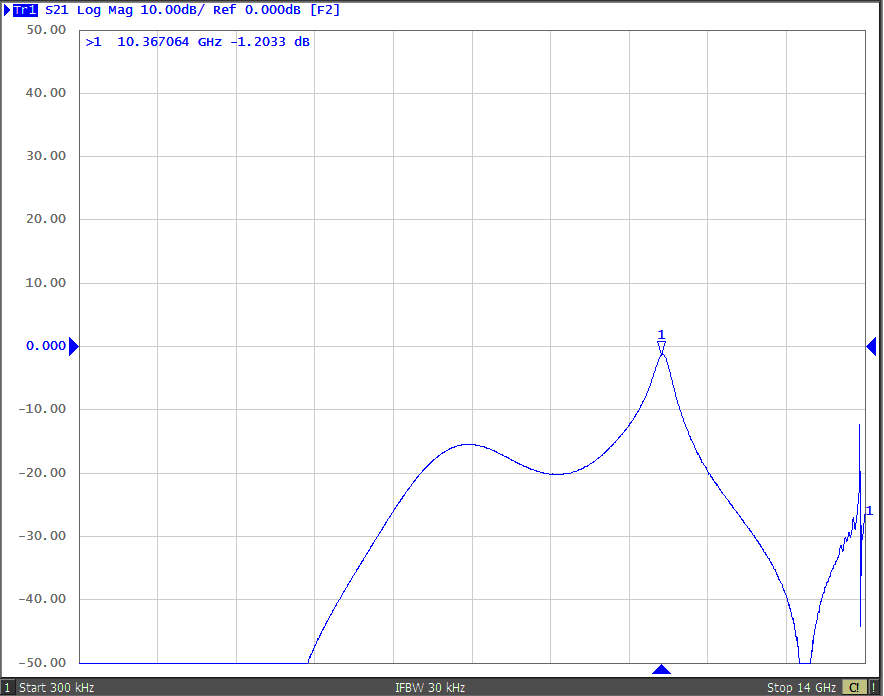
Marcel made some more pictures with the filter tuned to different frequencies.
It can be seen that there is some unwanted respone of -15dB around 7GHz. This stays more or less static with respect to the frequency the filter is tuned to.
From above you see that the coupling probes have 11mm length. 11mm x 4 in wavelength equals about 6.8GHz in free space. So direct coupling between the probes is the most probable reason.
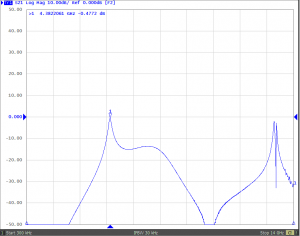
Filter tuned to 4380MHz
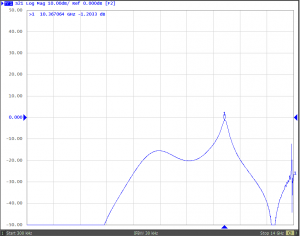
Filter tuned to 4380MHz

Filter tuned to 10368MHz

Filter tuned to 10368MHz

Another outcome was that the tuning range of the filter is very large from about 3.4GHz up to 12 or 13GHz.

Because of the static unwanted filter response i decided to open the cap again and shorten the probes to about 5mm (so about 15GHz). As described at W1GHz this has significant impact to bandwith and insertion loss of the filter. Now it is rather hard to tune it to the correct frequency. I will post some measurement results later.
June 16 Microwave contest

Update
My 1st place for 23cm in the german competition survived the logcheck. I am happy with the result although i have to say that there was only one strong competitor DK2MN in the single-Op class. Compared to may the 1st place result is about 12k less. The same points would have been place 9 in the multi-op class this time. Thats quite some difference.
My unplanned 10GHz operation brought position 16 at least.
http://ukw-funksport.darc.de/ukw/result/2016/jun-2016a.txt

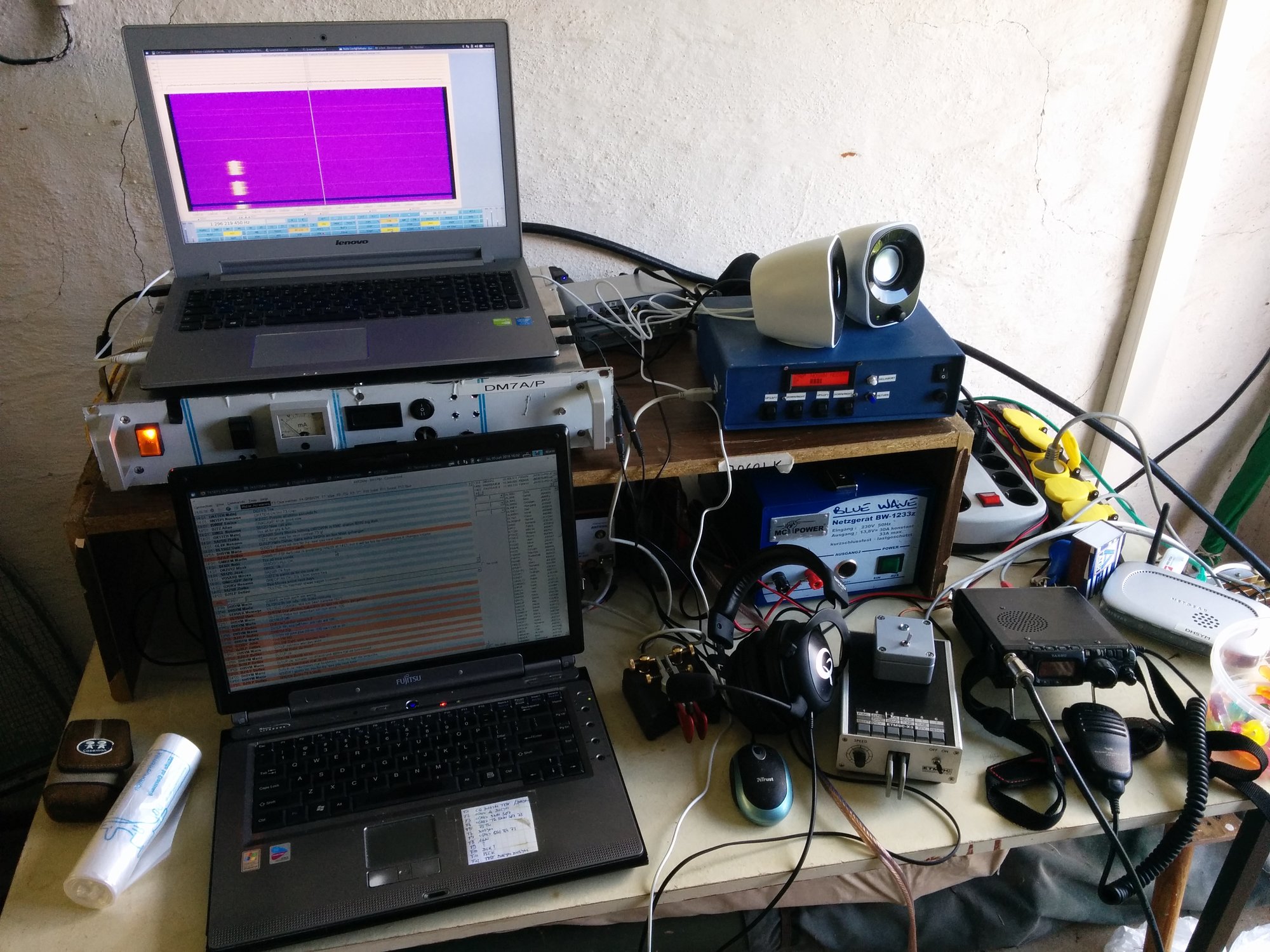
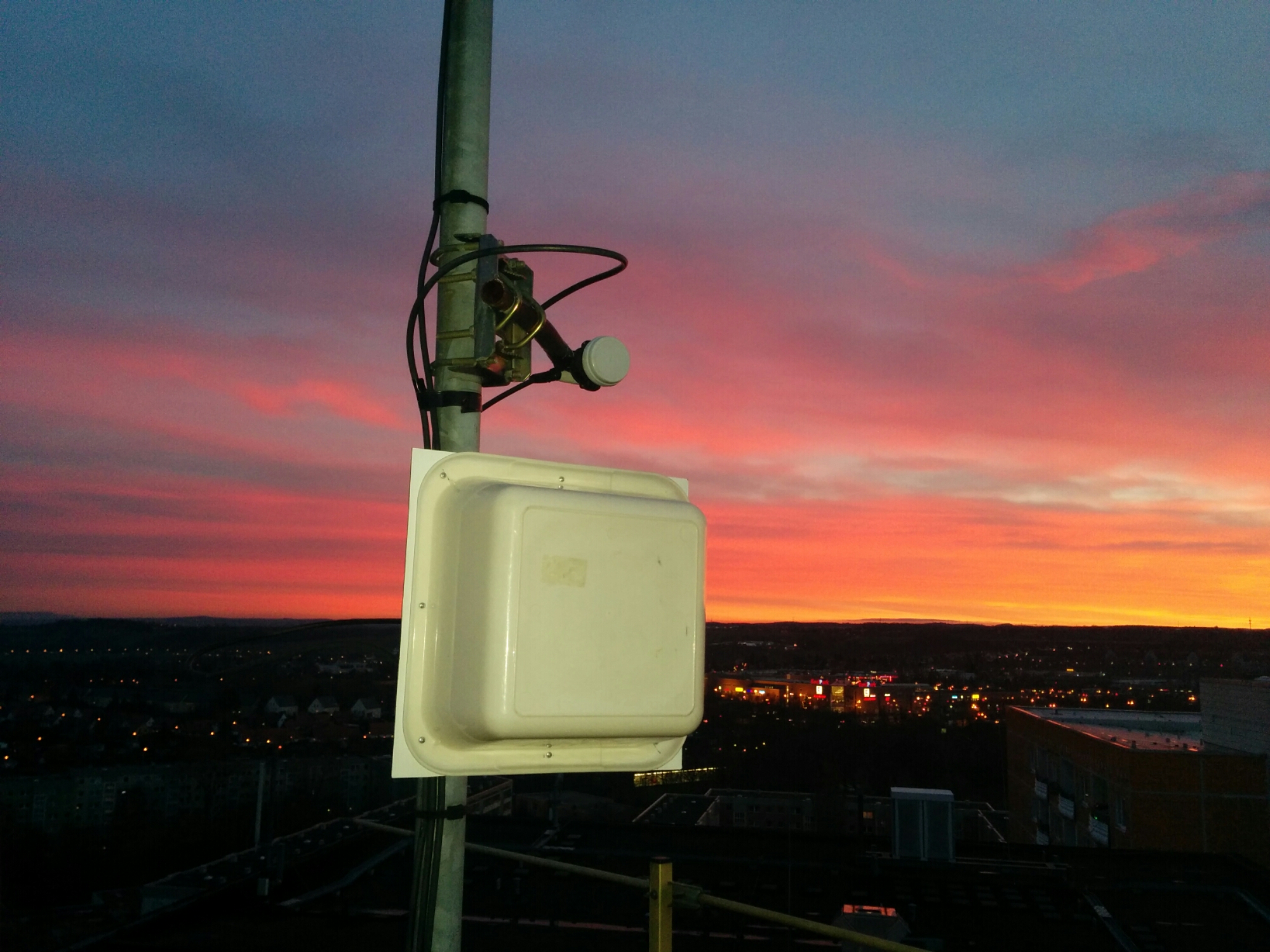
I was operating from JO60OM, Hirtstein. The equipment was as few times before: HiQSDR, DB6NT Transverter, PA 2x100W, 1.5m dish and Quados8 antenna. The thing that worked well for the first time was the control of the antenna from VUSC log via my rotator control unit. Entering the locator, press ctrl-?, here we go.

It seems because of the thunderstorms in many regions over Europe the activity was not very high. Still i made 107 QSO and about 25000 points. ODX was YU1LA  840km via aircraft scatter.

Saturday morning before the contest i decided to take the 10GHz transverter and the 40cm dish with me. That was a good choice actually. Although i just operated that on Sunday and only in north direction i made 19 contacts. ODX was PA0BAT about 500km.

june 2016 rig after the contest

june 2016 rig after the contest

May16 JO60LK

QRV with the DM7A team from Fichtelberg, JO60LK. We worked our various personal calls on 2m, 70cm, 23cm, 10GHz and 24GHz. The weather was sunny but very stormy.
On 2m we tried a tiny 2x2x5ele setup for 2 directions. The gain was somewhat low but still the ODX was about 850km with YU7ACO. We had two newcomer with us who worked on 2m.

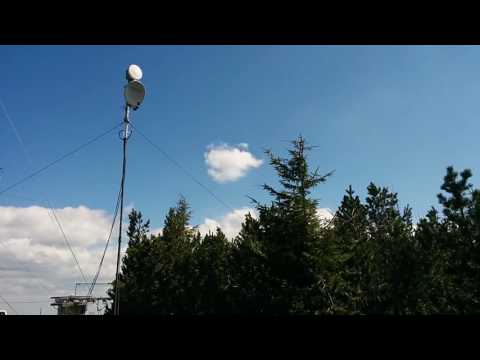
Here an impression of the wind in JO60LK.

V/U/SHF contest May 2016 in JO60LK

and a few pictures:

March 16 V-/U-/SHF contest JO61VB

This time i had to stay home. I used the little time to check the equipment for 2m.
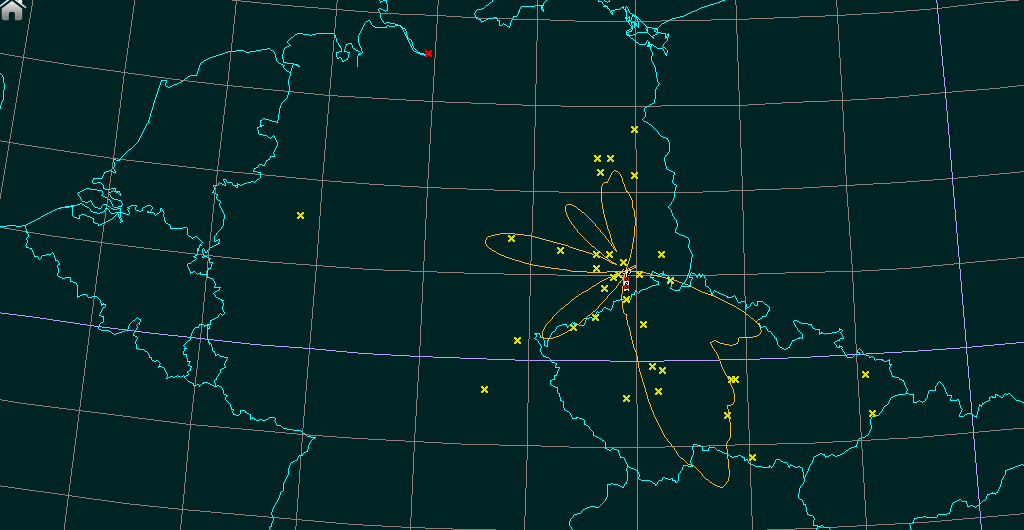
In the end i had 37 QSO in about 3 hours of operation time. Not a lot. Given that i just use a omni antenna i am still fine.

March 16 - stations reached

March 16 – stations reached


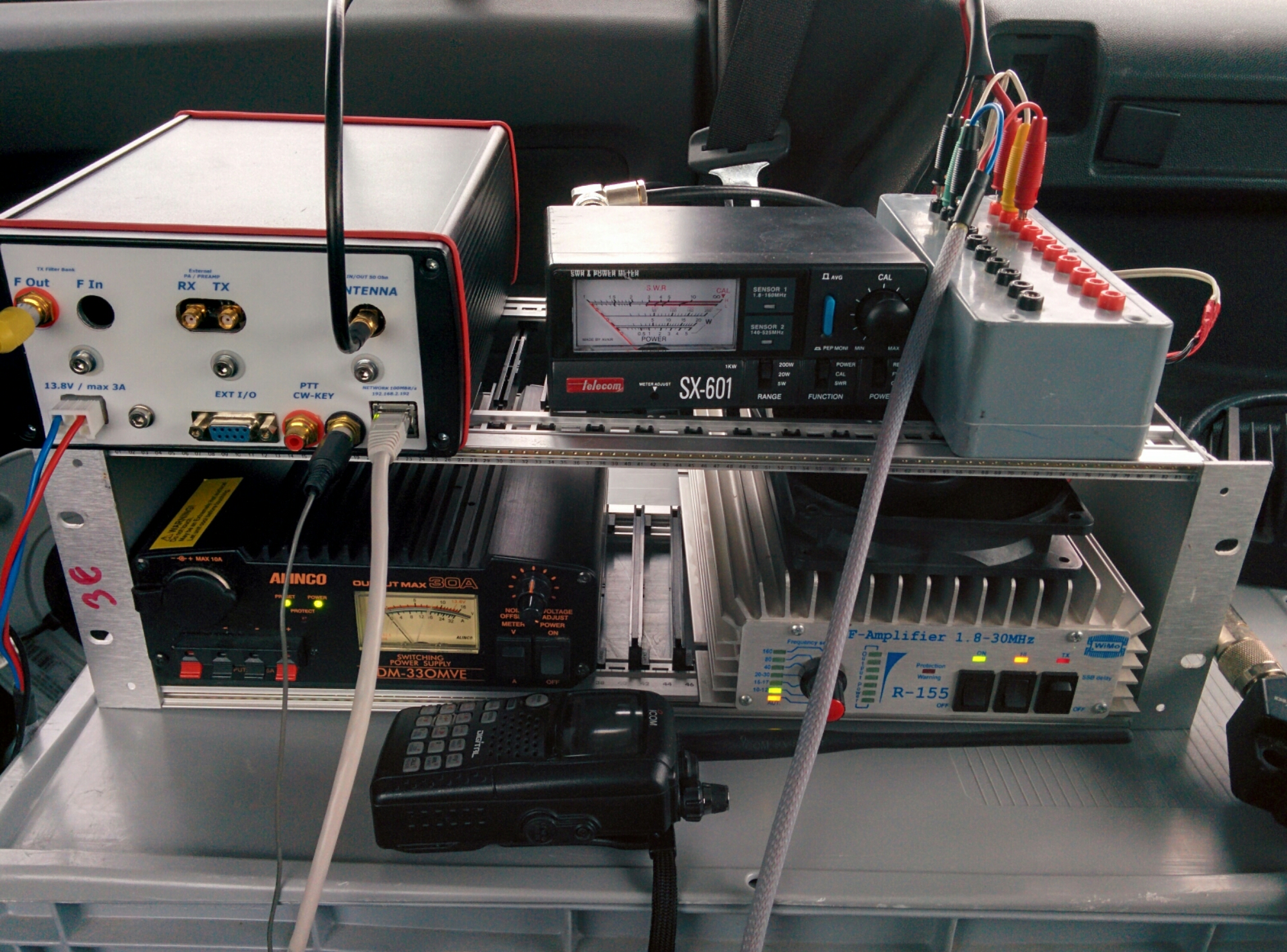
I used my HiQSDR + ME2HT setup. This time i used a Odroid board with cwdaemon for keying. With that the rig can be placed anywhere in the house and the SDR/Log PC can be connected via wireless LAN. This enables contest operation from the couch without annoying the family by loud fans or clicking of RX/TX relais.

WSJT-X 1.7.0-devel for Odroid U3

For some tests i finally succeeded to compile WSJT-X 1.7.0-devel with JTSDK.
https://sourceforge.net/projects/jtsdk/files/linux/
The documentation seems to differ from what needs to be done slightly. The difference was that i needed to place the jtsdk-xxx directory in my home directory and rename it to jtsdk. I used jtsdk to generate a .deb package. Find it below. Maybe its useful for someone.
I run a small Odroid U3 board with the Ubuntu 14.04.2 image from hardkernel. The board itself is obsolete meanwhile. Maybe the package can run on other ARM boards too.
wsjtx_1.7.0-devel_armhf.deb
I am not sure what dependencies you need. Please refer to the JTSDK readme if you need some guidance.

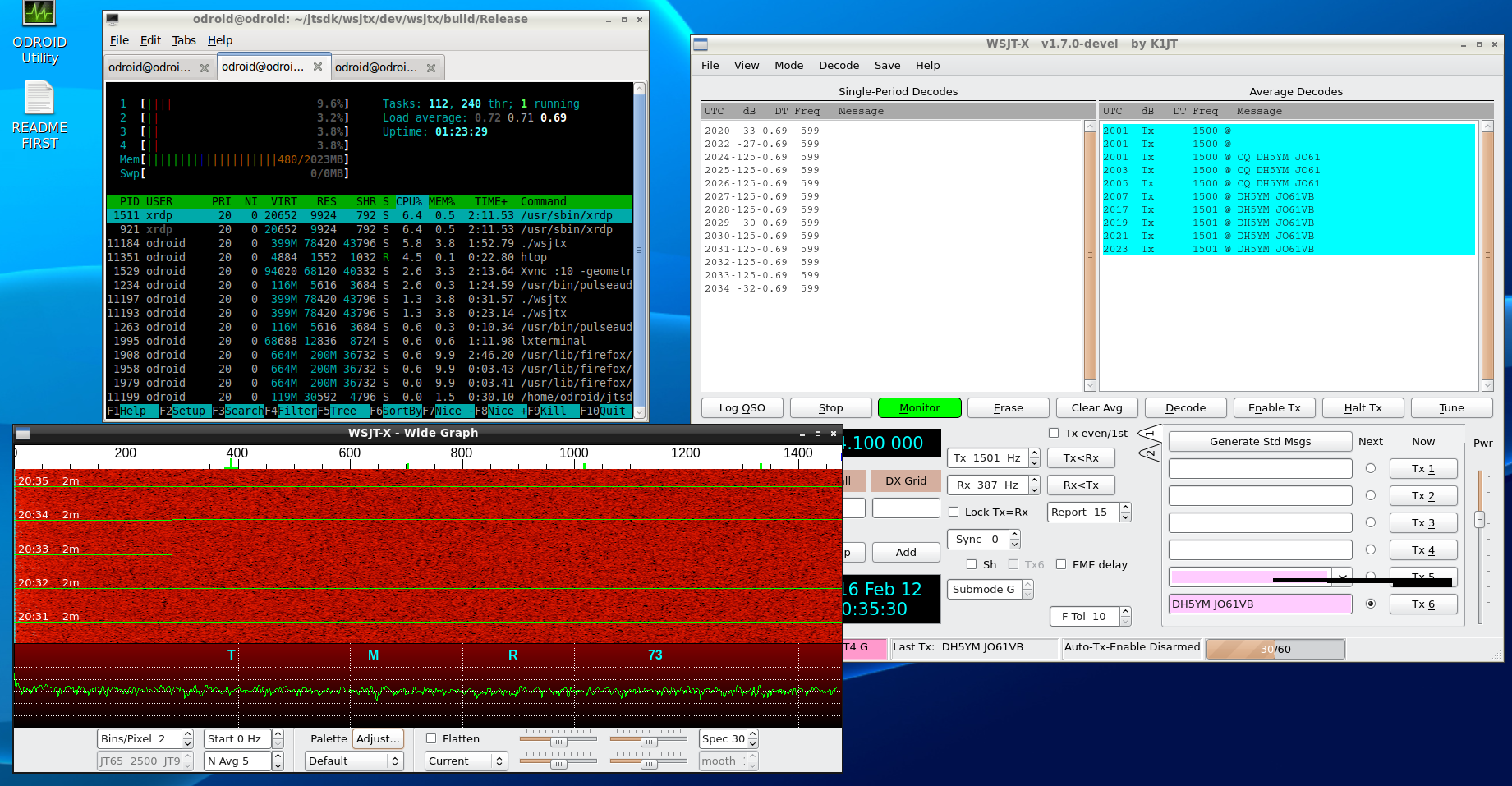
This is a screenshot of the software. I did not do a qso yet. So i cannot guarantee that it is really working well.

wsjtx-1.7.0-devel on Odroid U3

wsjtx-1.7.0-devel on Odroid U3

WSPR and 10m Aircraft Scatter

image

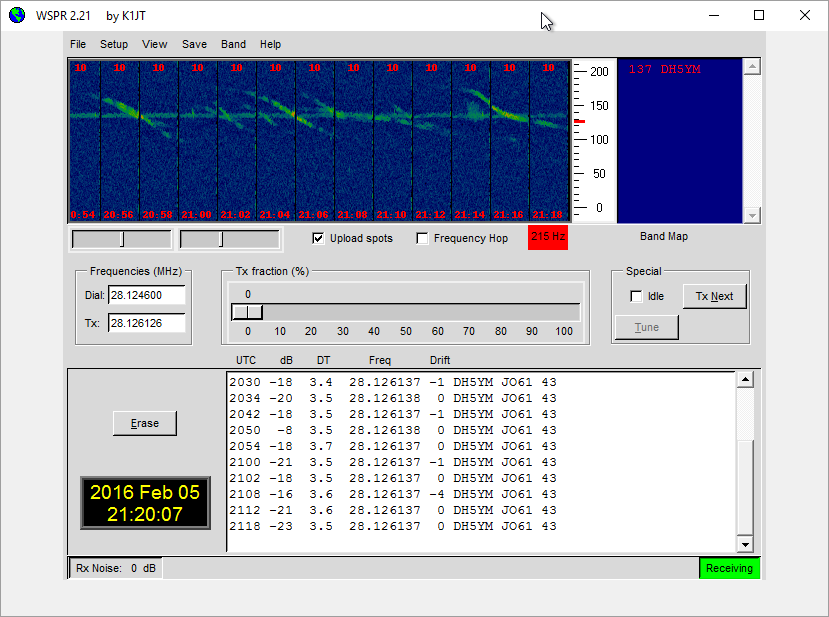
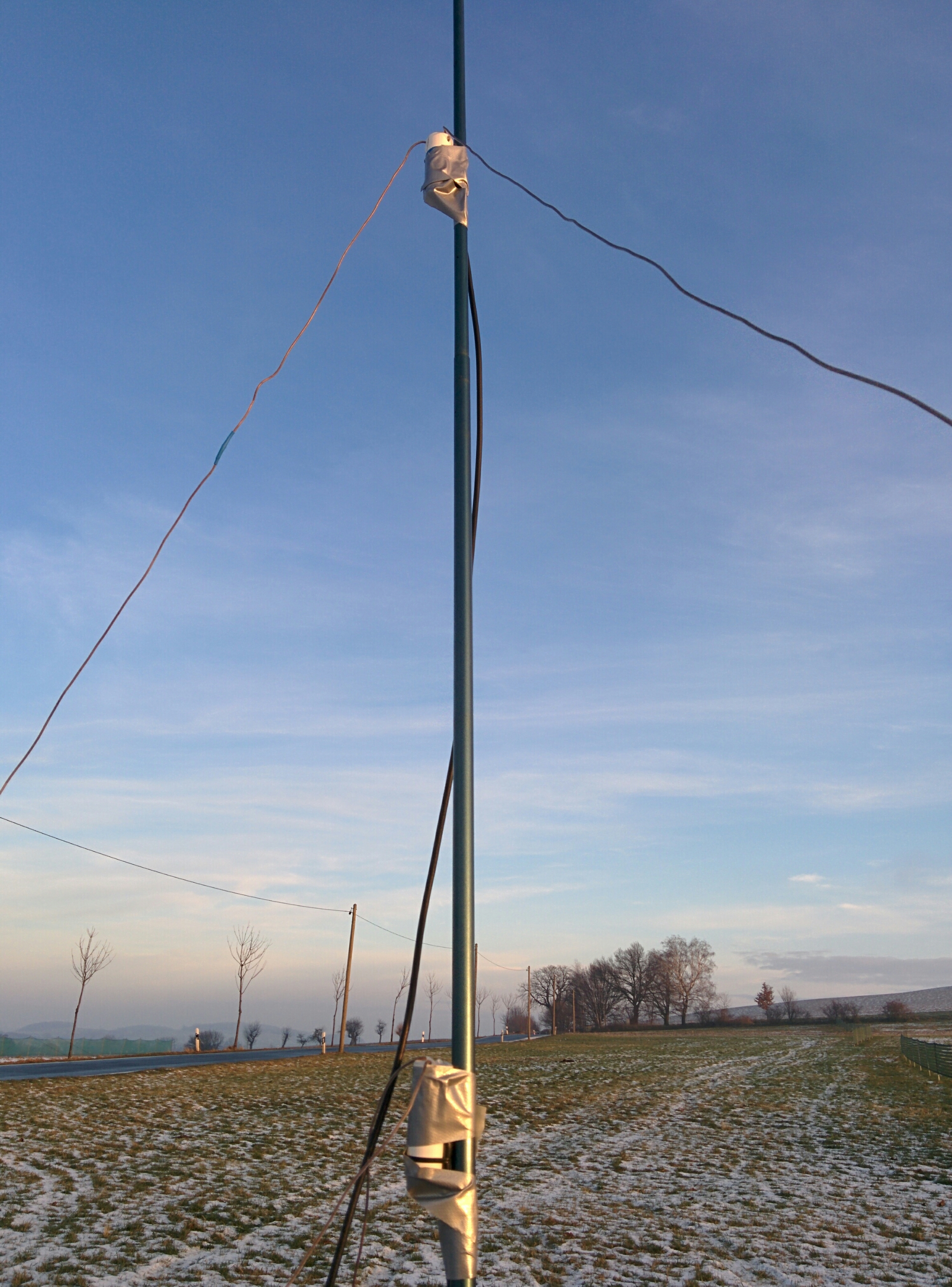
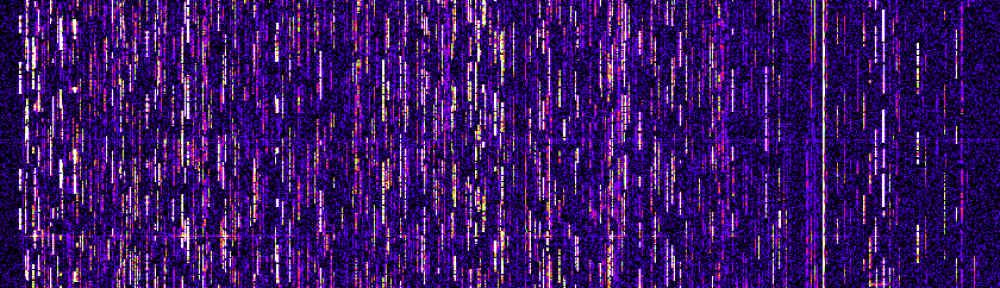
A evening of TX. The picture was made by DK1RS in a distance of 80km and shows my signal (horizontal line) during about half an hour. The crossing lines are reflections from aircraft +- Dopplershift. So far signal raises about 10dB compared to the direct path between Rainer and myself. WSPR cannot decode if the Aircraft Reflection is present because it cannot deal with the Doppler drift.

image

A L-band QFH Antenna

image

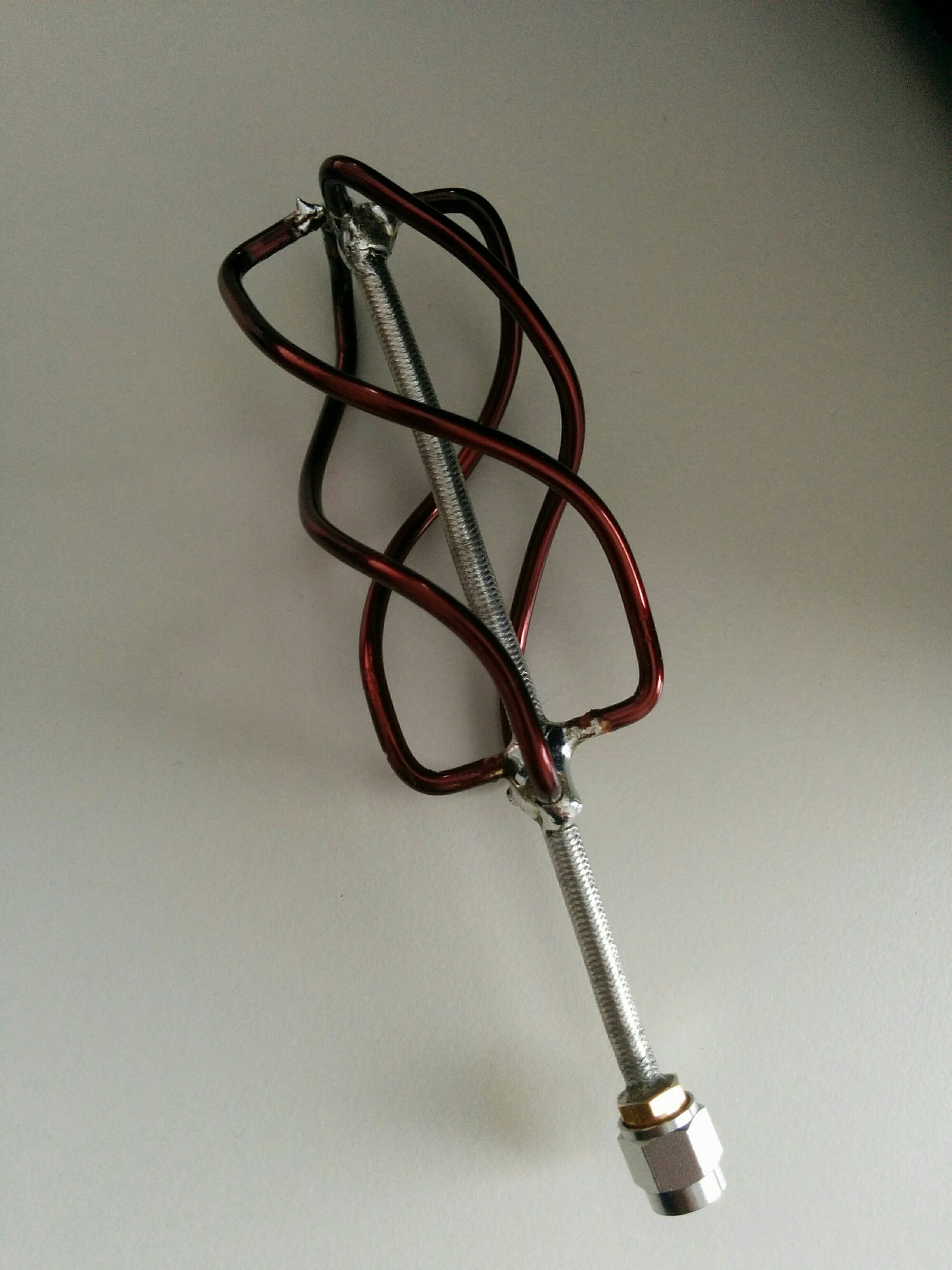
A simple project in between. This is a small quadrifilar helix antenna for the L-band. The measurememt does not exactly fit the calculation but for the first trial it seems ok. Probably the thickness of the material was not considered for calculation of the length of the loops.