2021 June NAC 70cm

Rig: HiQSDR, Iceni Transverter, 50W, HA8ET LNA, 15ele
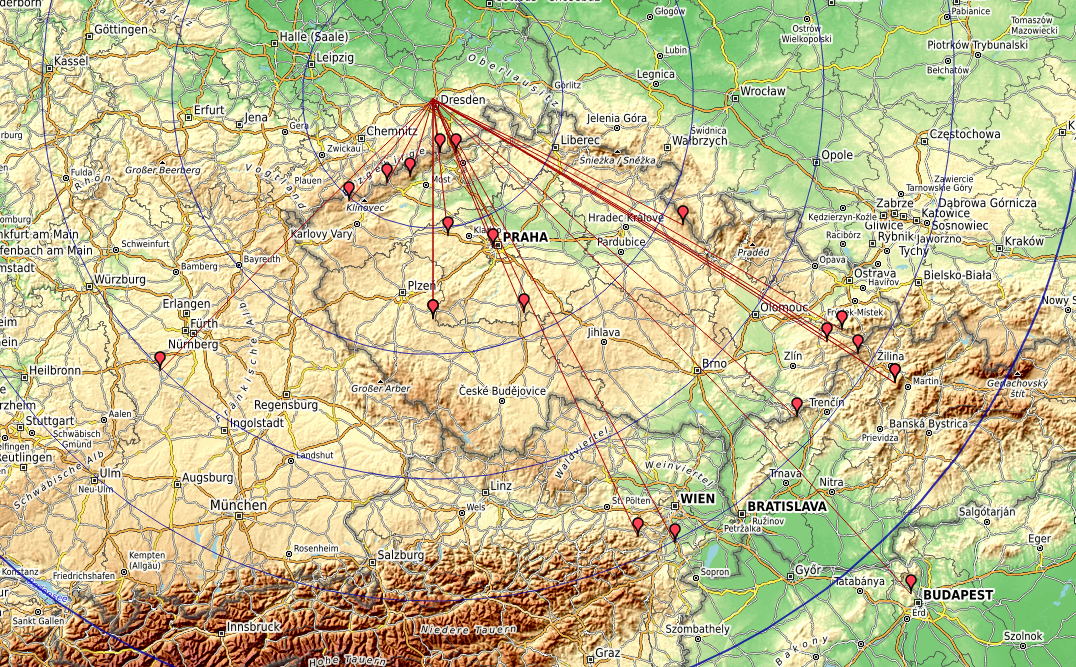
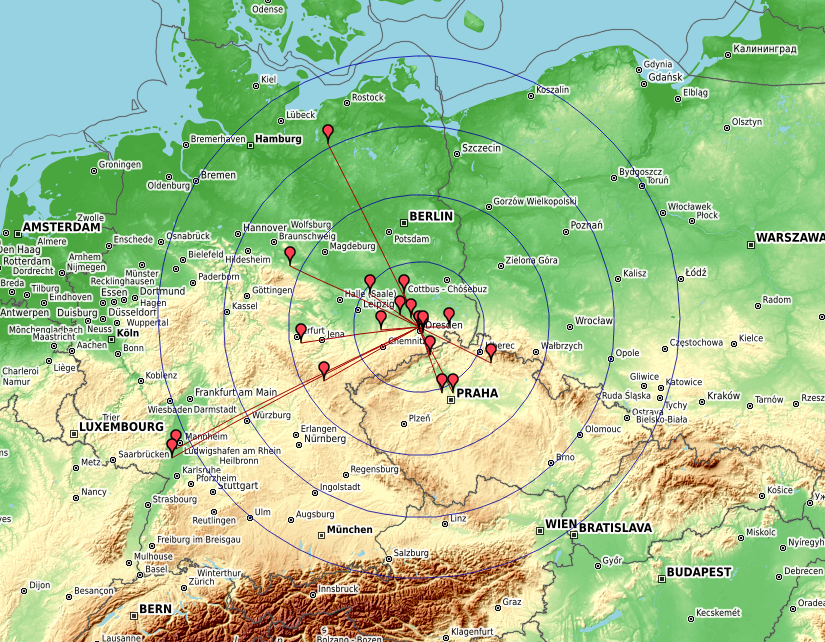
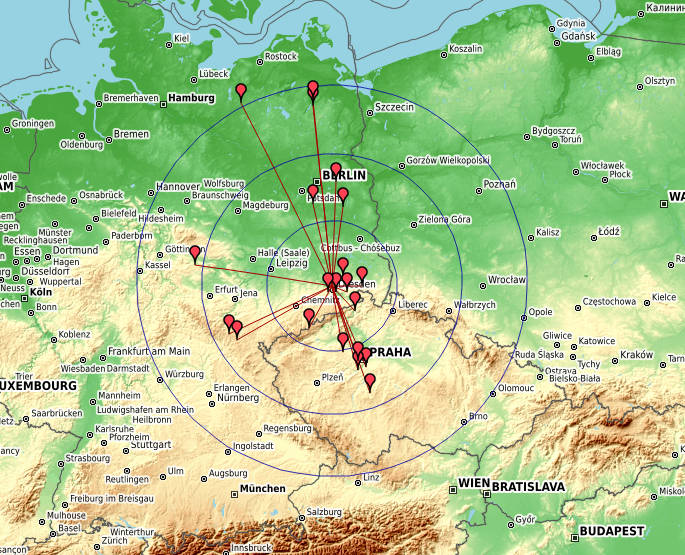
Result: 13QSO, 5900p, ODX SM6VTZ 820km

I drilled some additional holes into the boom of an old 21 Tonna fragment in order to mount the mast clamp. Together with a 2nd segment this gave 15ele with some suboptimal clamp mounting close to one of the directors. But better than my 5ele lightweight i estimated. It turned out to be right.
Some of the OZ stations where easy to work. OZ1DLD/P even in SSB. Outstanding signal from SM7DTE. ODX was again SM7VTZ with a rather short AP reflection this time. But i was happy to work him with my 50W qrp signal. An average of 424km per QSO is surprisingly good.
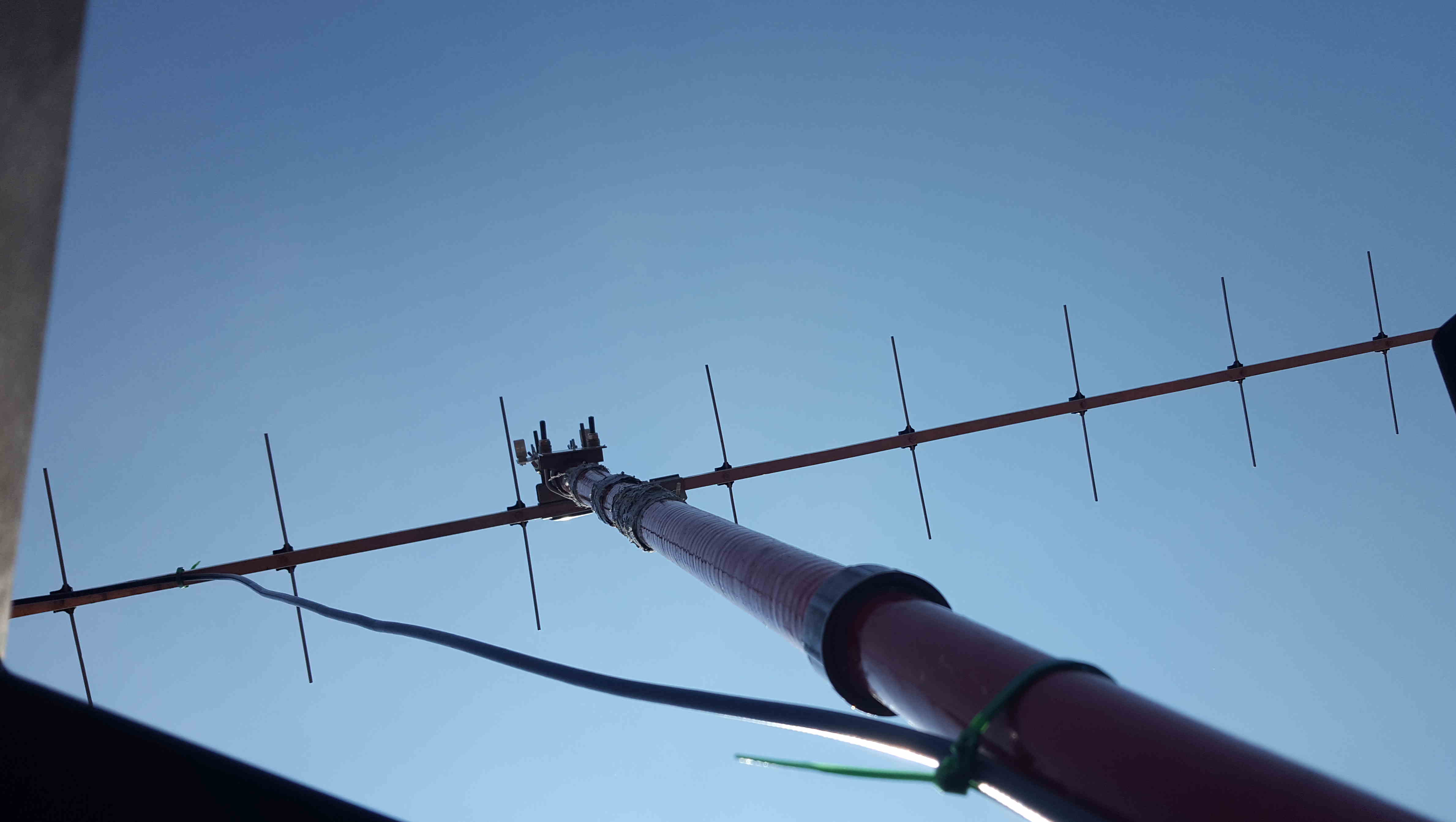
15ele made of parts from 21ele tonna


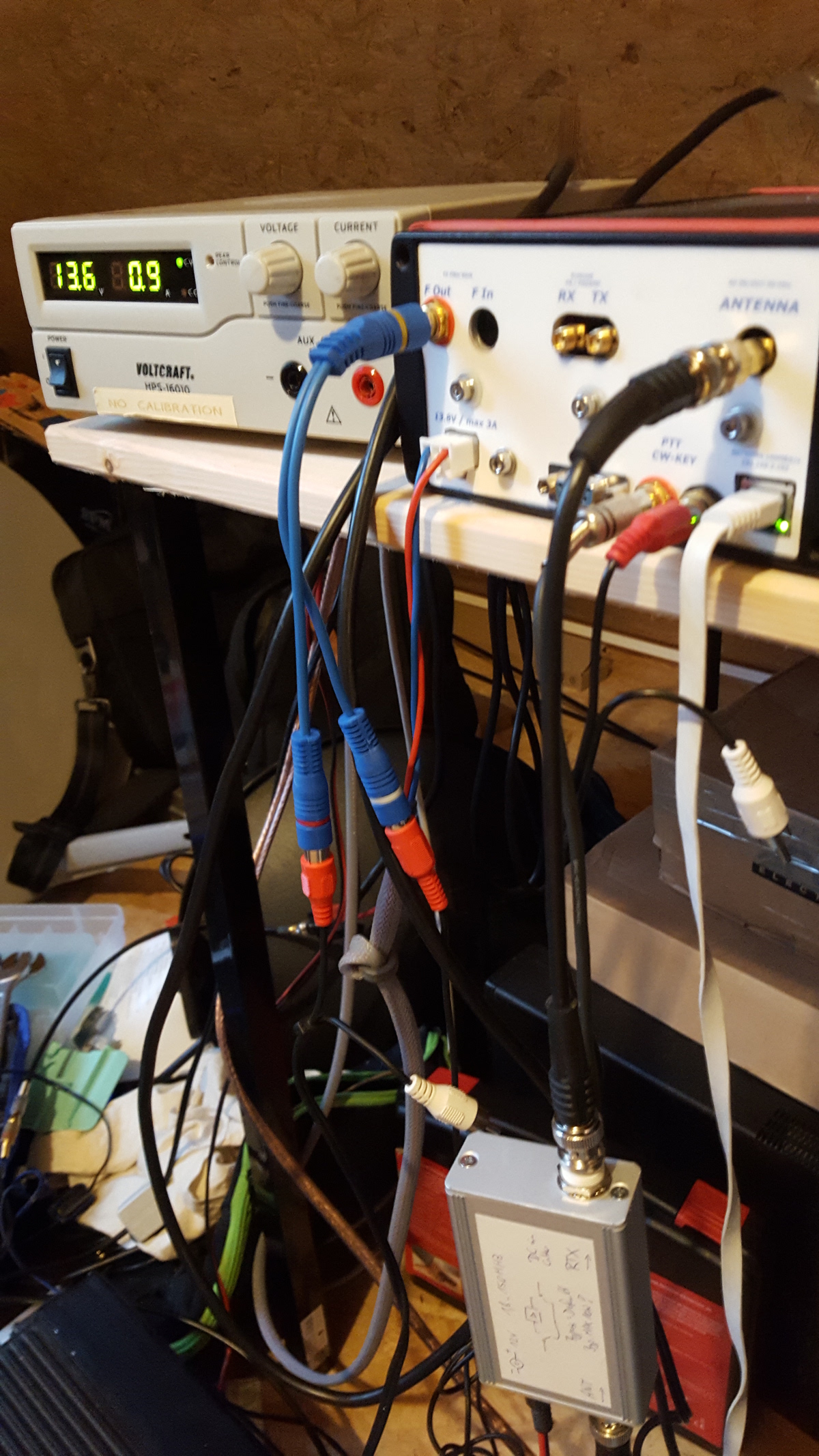
my 70cm “transverter in a box” mess. But it does the job.
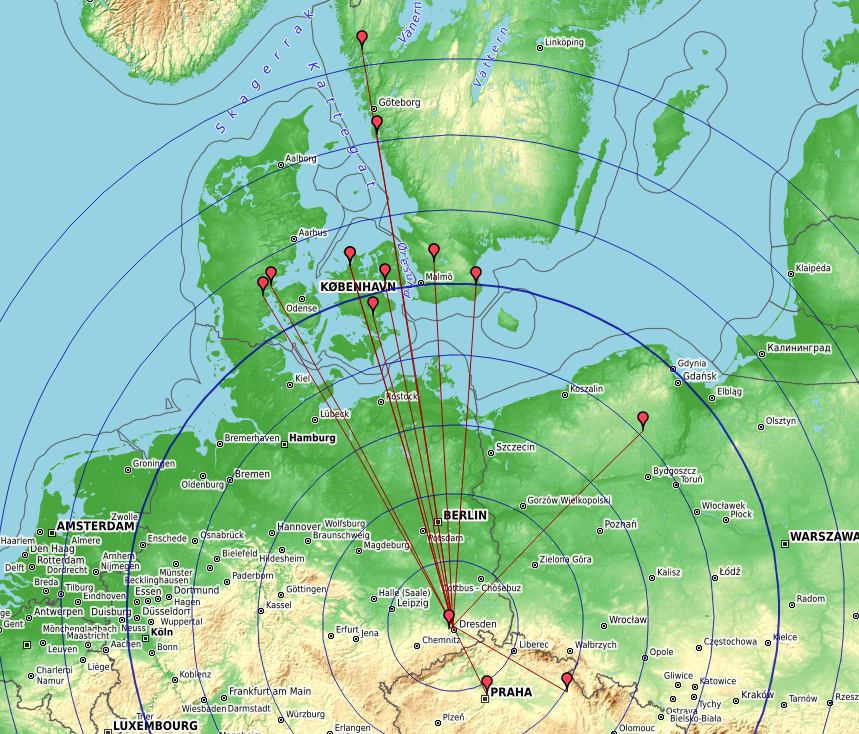
Jun21 NAC 70cm – (C) OpenStreetMap-Mitwirkende, SRTM | Kartendarstellung: OpenTopoMap (CC-BY-SA) – created with DL4MFM log analyzer
IARU June contest 2021

Because of some Covid restrictions still in place in DL there was the decission to remove the nigh time from the contest period in Germany. For me this was a very unfortunate decission since this is usually the only time where i can operate without interruptions or other assignments.
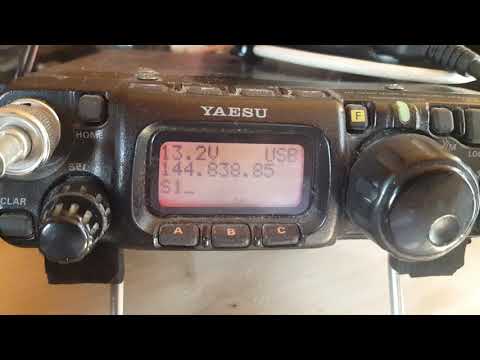
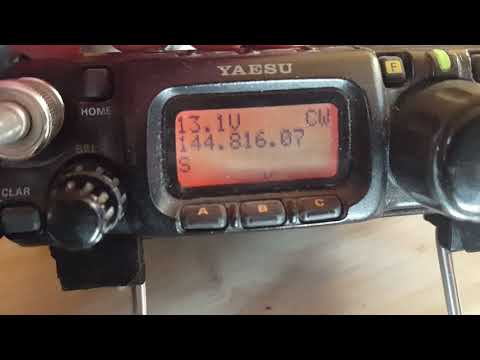
In the afternoon there was quite some RS condition. I tried to find some QSO partner on 6cm but did not succeed. I heard DB0FGB (JO50), DB0NCO (JN59) and a OK station calling. The OK station did not come back to my call and i was not lucky in the ON4KST chat.
Videos of the beacons received:


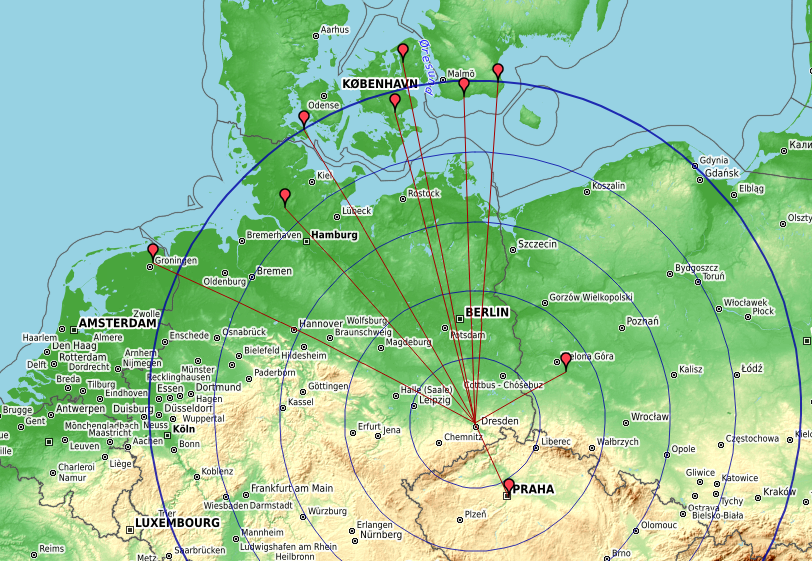
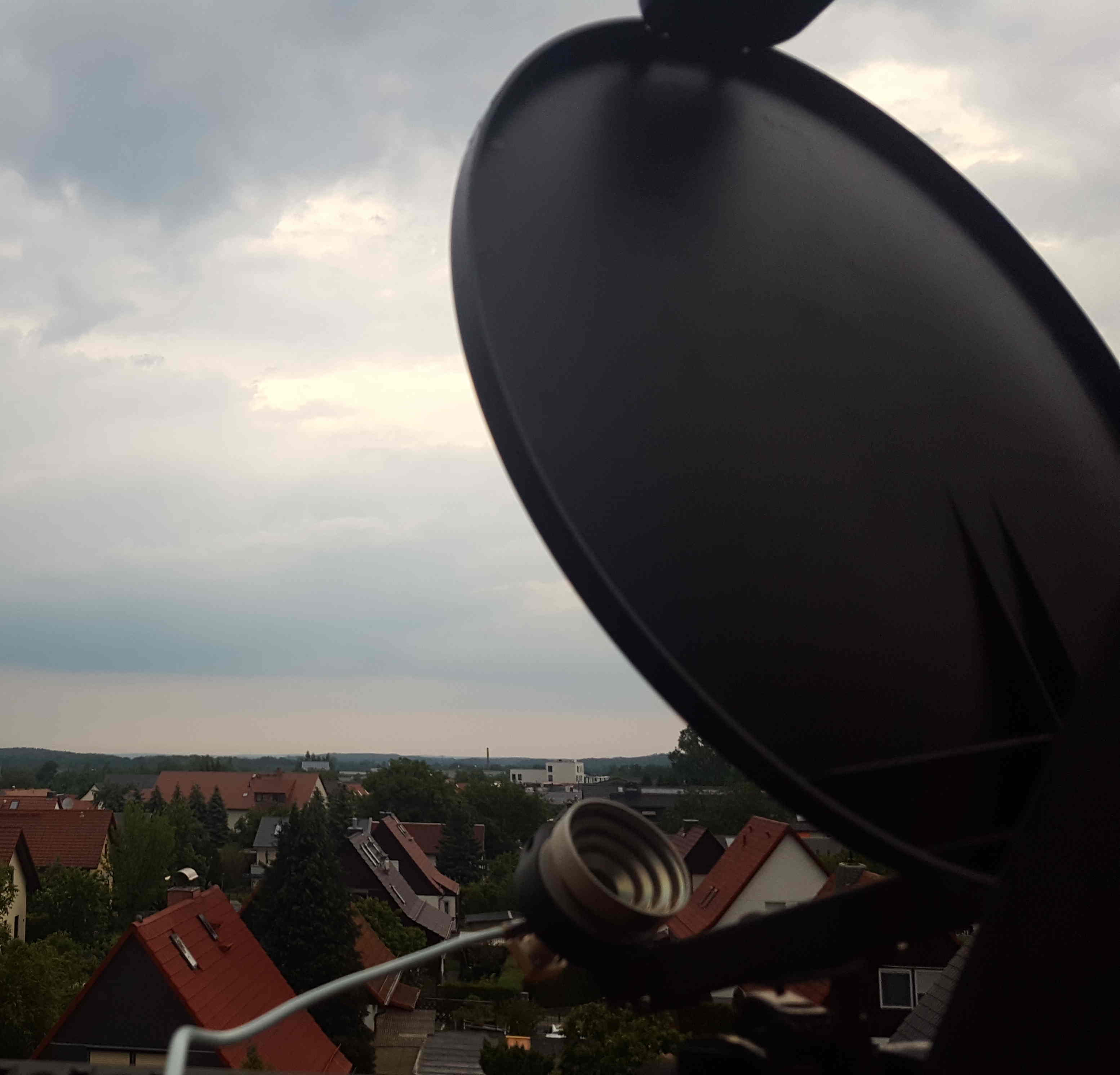
Then i switched to 10GHz. Usually i am limited to direction south because of problems moving the dish through the upper roof window. This time i managed to put the little plastic dish outside to work some station to the north. At least DF0YY made it to the log this way.

Dish for 3cm on the roof top direction north-west


Jun21 3cm – (C) OpenStreetMap-Mitwirkende, SRTM | Kartendarstellung: OpenTopoMap (CC-BY-SA) – created with DL4MFM log analyzer


Rig 3cm: FT-817, old transverter, 10W, 35cm dish with W1GHZ dualband horn
Result 3cm: 7QSO, 660p, ODX OK1FPR 200km

Later i tried 23cm. 10pm local time was already close. But i was not sure if i would be able to do some more QSO on sunday. So i decided to give some points to others outside DL at least and continued for a while. In the end i did not switch on on sunday again.

Jun21 – 23cm – (C) OpenStreetMap-Mitwirkende, SRTM | Kartendarstellung: OpenTopoMap (CC-BY-SA) – created with DL4MFM log analyzer


Rig 23cm: HiQSDR, MKU13G3, 100W, 36ele
Result 23cm: 19QSO, 4600p, ODX HA5KDQ 550km

NAC2m June 21

Short participation in 2m NAC.
Rig: HiQSDR, ME2T, 200W PA, 4ele
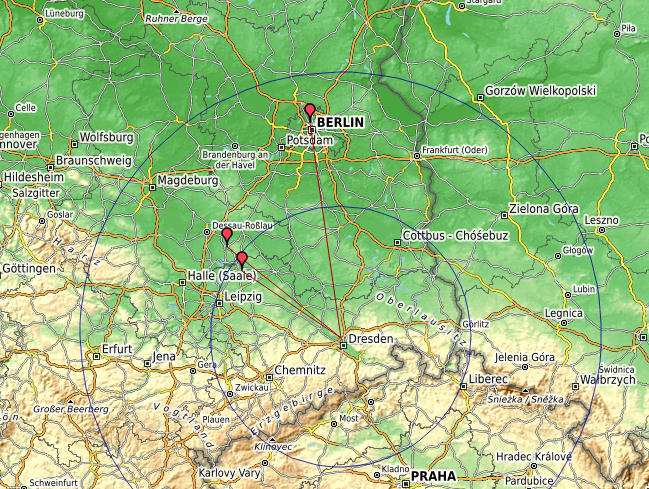
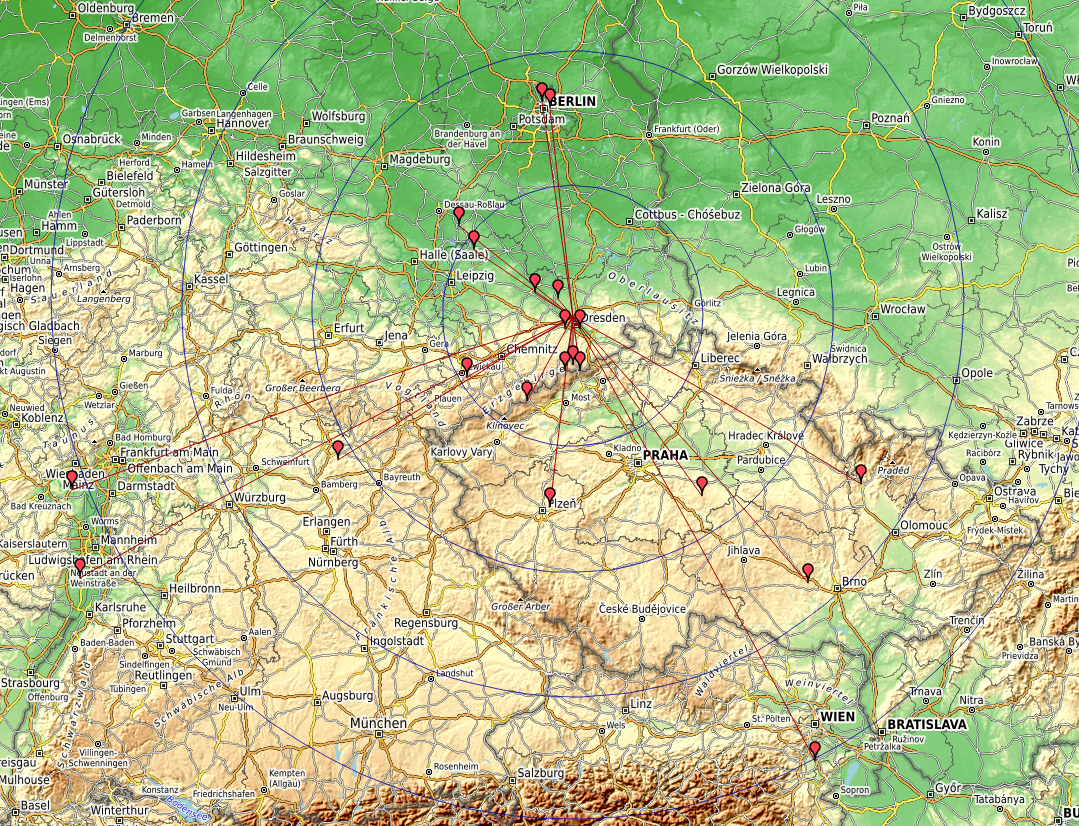
A nice SSB QSO with SK7CY, ODX PA0O 540km.

June 21 NAC 2m – (C) OpenStreetMap-Mitwirkende, SRTM | Kartendarstellung: OpenTopoMap (CC-BY-SA), map created with DL4MFM log analyzer
DUR 21/05

2 of 3 hours from home. Quite good on 23cm. Some nice QSO on 9cm. Unfortunately no QSO on 6cm.

21/05 DUR 23cm Kartendaten: OpenStreetMap-Mitwirkende, SRTM | Kartendarstellung: OpenTopoMap (CC-BY-SA), DL4MFM log analyzer

21/05 DUR 9cm Kartendaten: OpenStreetMap-Mitwirkende, SRTM | Kartendarstellung: OpenTopoMap (CC-BY-SA), DL4MFM log analyzer
March 21 IARU contest

Since there were still heavy covid restrictions and no chance to sleep somewhere we decided not to go to JO60OM for multi-Op. I was planning to be part time qrv from home in JO61UC. Since i completed my test-setup of the Iceni 70cm transverter i was able to operate 3 bands, 2m,70cm,23cm. More bands are not possible because the mast is too short and 13cm is not ready yet.
Despite i thought different my main operating time was saturday afternoon. I started with 70cm because i was curious for this band that i never operated from home before. It started very slow, almost nobody qrv in the beginning. During the contest some nice QSO came on top with S59P and S57M. Keep in mind that this is only 5ele and 50watts.

70cm March 21, OpenStreetMap-Mitwirkende, SRTM | Kartendarstellung: OpenTopoMap (CC-BY-SA), DL4MFM Log Analyzer


I later changed to 23cm and did some qso there. On 23cm it is a bit easier since i have 36ele and 100W. Many thanks to DL3IAS and DL3IAE for the ODX QSO via AS.

23cm March 21, OpenStreetMap-Mitwirkende, SRTM | Kartendarstellung: OpenTopoMap (CC-BY-SA), DL4MFM Log Analyzer


2m i started in the evening after the kids were sleeping. Unfortunately the conditions were very poor and i ended up with frustrating 20 QSO.

2m March 21, OpenStreetMap-Mitwirkende, SRTM | Kartendarstellung: OpenTopoMap (CC-BY-SA), DL4MFM Log Analyzer


Overall the result was a bit disappointing with the highlights of the 70/23 ODX QSO and the fact that the 70cm transverter was working fine.

Some more about SAW filtered LNA

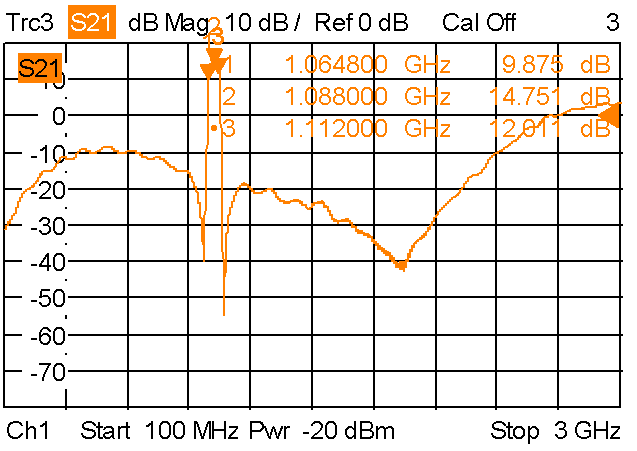
The 1090MHz filters arrived and i measured this variant plus one without filter.

Closer to the filter the response looks quite ok:

LNA 1090MHz

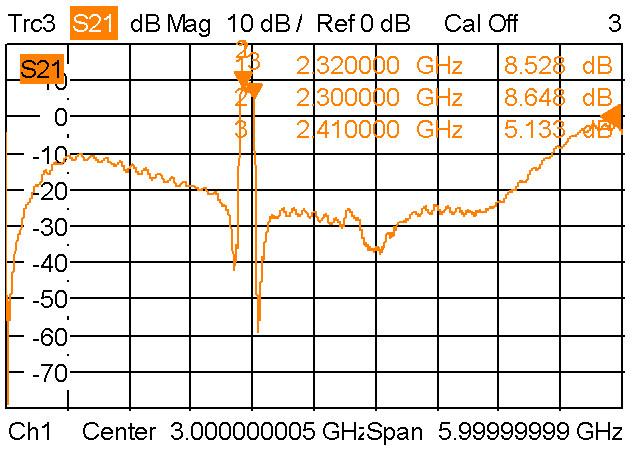
Far away from the passband the supression degrades. Especially very high frequencies pass the filter quite well.

LNA 1090M span 3GHz

This is the assembly with 47pF capacitors and a 27nH coil for supply of the MMIC. Below 200MHz does not pass the capacitors well. There is even some remaining gain at 3.4GHz although its a 1.6mm thick FR4 PCB.

LNA without filter

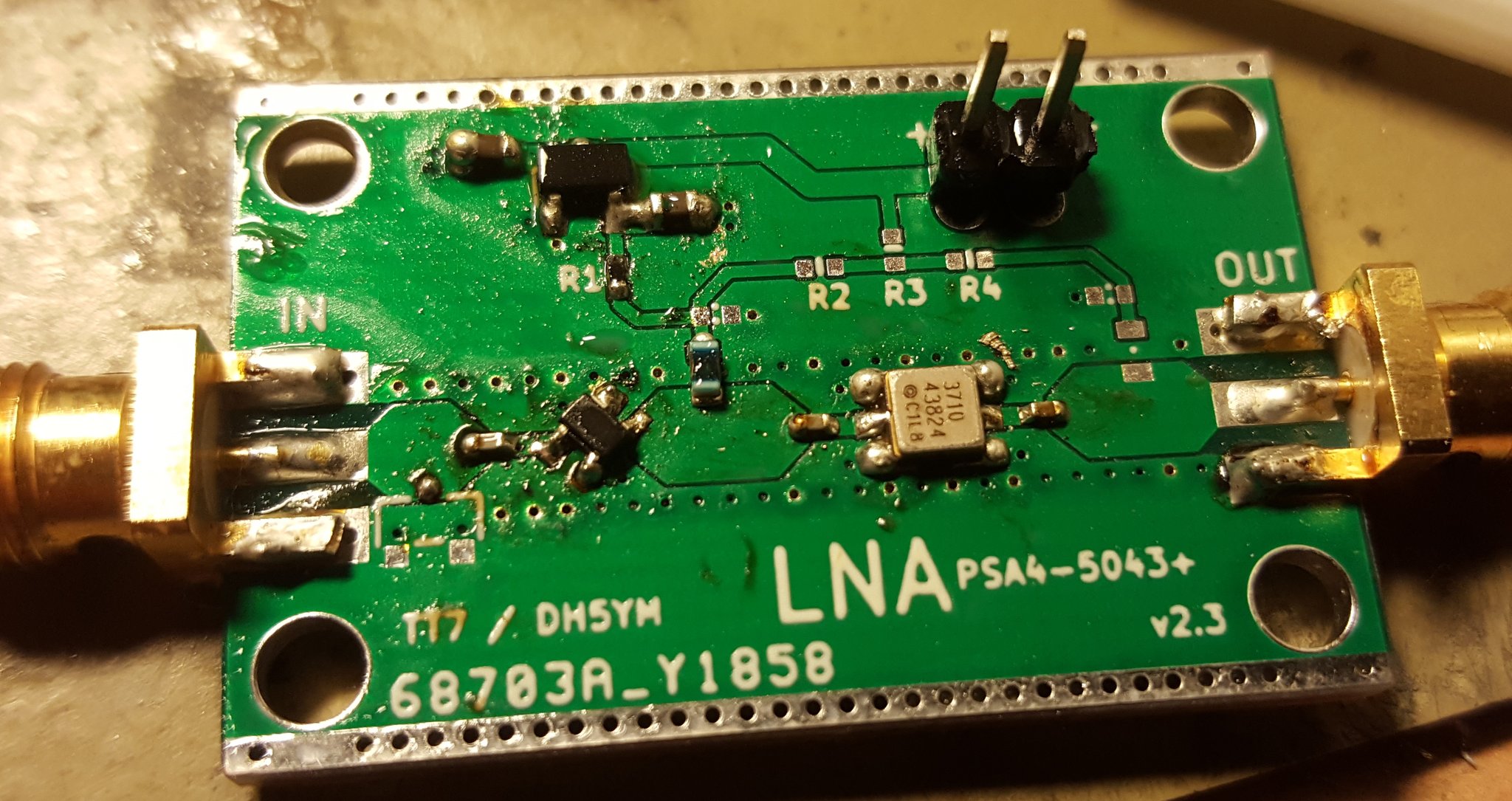
LNA with SPF5043 and SAW filter

A while ago i tried the Eagle import capabilities of Kicad. I used a design of the baloon experimenteer “TT7” from Czech Republic and did some modifications to the layout. Since the LNA looked promising i sent the design for production and ordered some components. I had to replace some components for easier sourcing.
The MMIC i replaced with the compatible type SPF5043. Instead of the 3.3V regulator i used the variant with 5V output and up to 16V input. The options for the SAW filters are limited. The 70cm filters usually allow for the lower half of the band but the curve will degrade around 437MHz. A filter for 23cm and one for 13cm was availabe as well. The same for 1090MHz. Unfortunately none for 405nm was available. There is an option for phantom feed of the LNA as well as mounting an ESD diode. Unfortunately i did not care about the width of the RF traces. They are far to wide. Fortunately the trace in front of the MMIC is short.

SAW filtered LNA


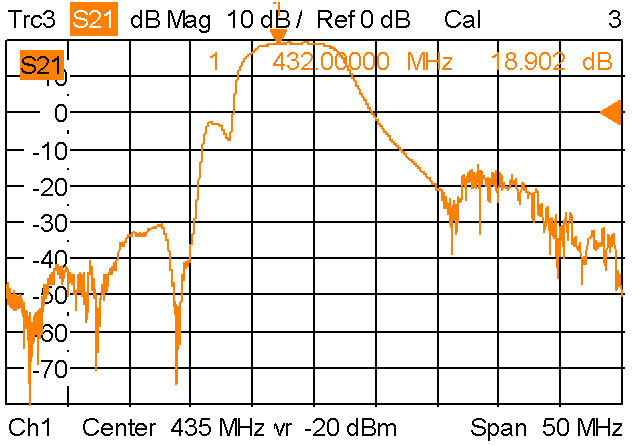
For test i assembled one board for 70cm, 23cm and 13cm each.

LNA 70cm


As written above the 70cm SAW starts to attenuate a lot around 437MHz. There was a type with broader response but it is available nowhere.
The overall gain is about 18..19dB which is in line with MMIC and filter datasheet.

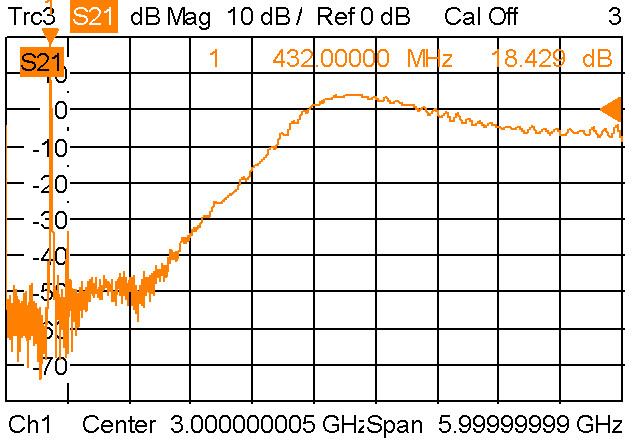
LNA 70cm wideband


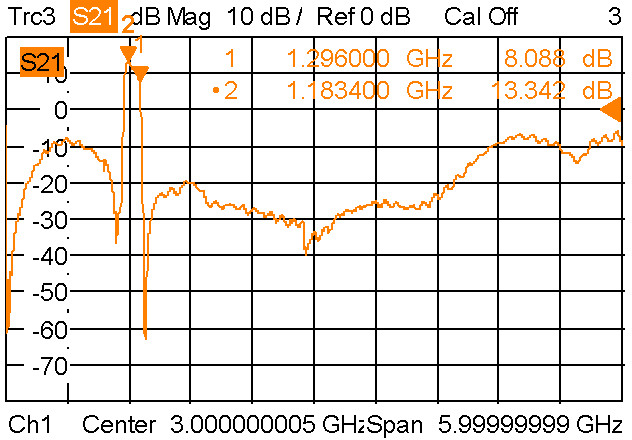
Looking to the wideband response of the filter reveals that it looses its filter capabilities over 1200MHz.

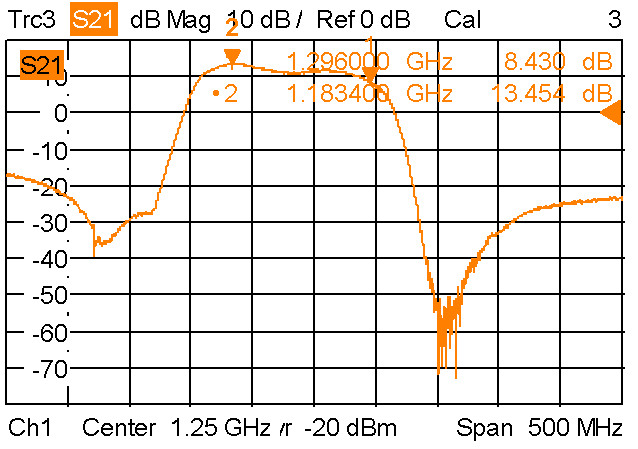
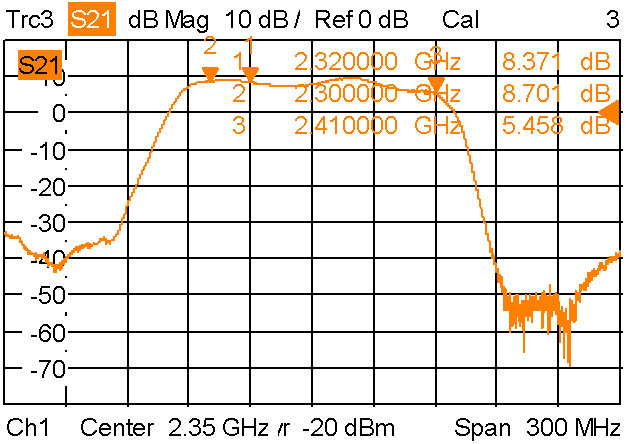
LNA 23cm


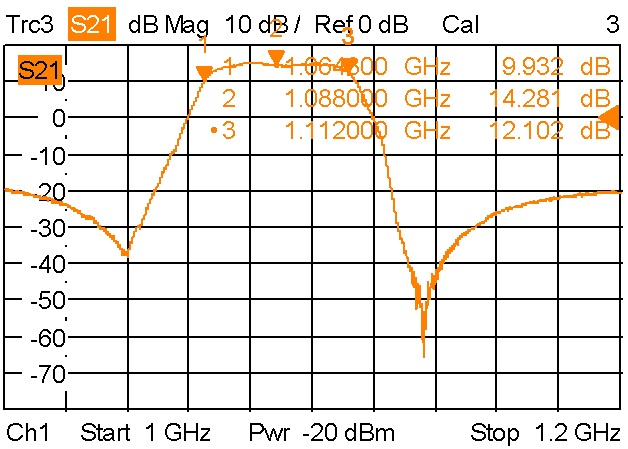
The filter used for 23cm is a bit wide. It exceeds the amateur allocation a lot at the lower end. At the upper end 1296MHz is already at the edge. The maximum gain is around 1180MHz with 13dB. For 1296MHz it results in roughtly 8dB gain only.

LNA 23cm wideband


The filter capability is maintained over a broader range and de-rates at over 5GHz.

LNA 13cm


The filter for 13cm fits pretty well. Although the MMIC has even less gain the filter also has less attenuation than the 23cm type on 1296MHz. Therefore it also results in about 8db gain.

LNA 13cm wideband

DARC 10m Contest 2021

This year i spent quite some time in preparation of the 10m contest. Already a year ago i bought some fishing rods with the plan to make a Moxon antenna. This antenna was realized now. The transceiver was my HiQSDR again driving a R155 PA. In order to improve sensitvity i connected a wideband LNA from Funkamateur. The LNA was switched on and bypass by one of my sequencer PCBs. Quisk SDR forwarded 192kHz IQ samples to skimmer and from there the decodes went to the bandmap of tlf log. I started in CW and worked quite some multies. After one hour i changed to SSB which was a likely a fault because the activity in phone was low. The last 30 minutes were spent in CW again.
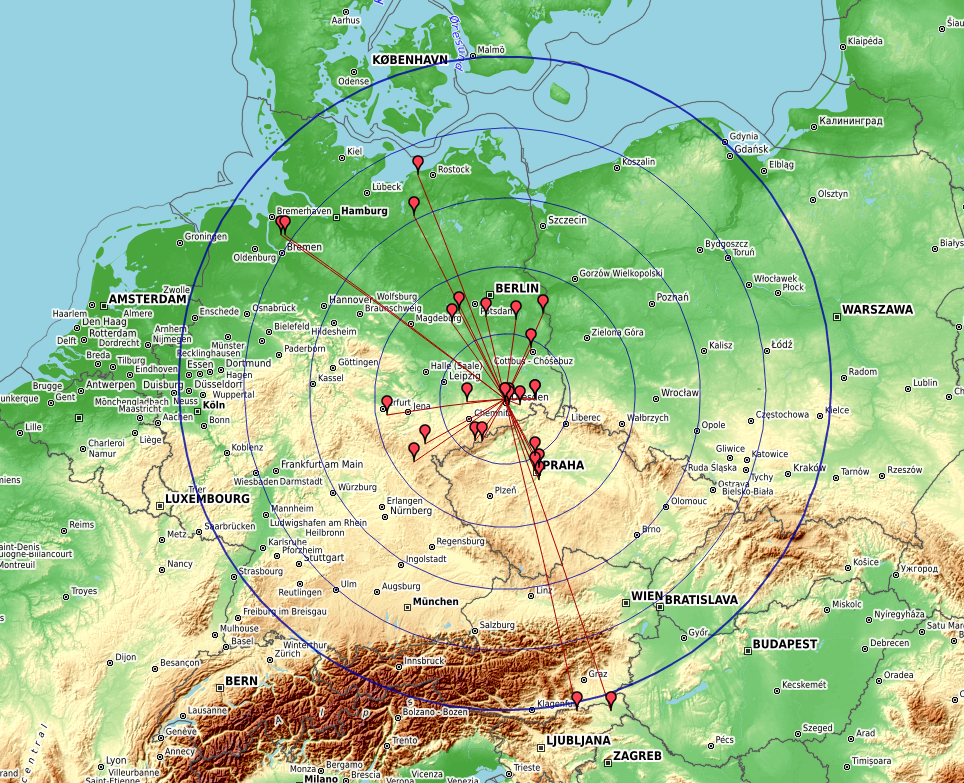
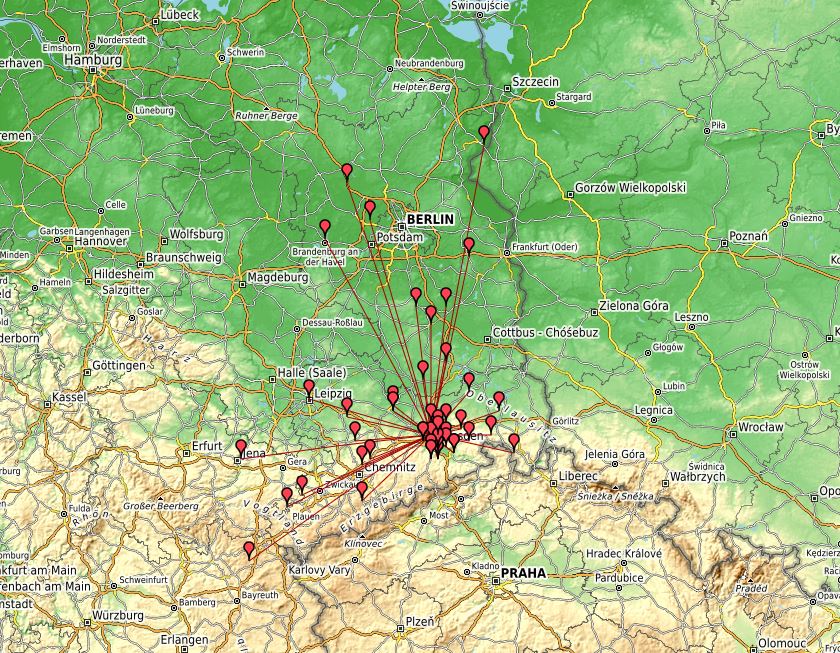
The map below shows the locations of the stations worked. They were taken from internet and might be incorrect. The map shows that i mainly had the moxon to north and west direction.

stations worked in 10m contest 2021 – maps by openstreetmap and opentopo contributors via DL4MFM edi analyzer


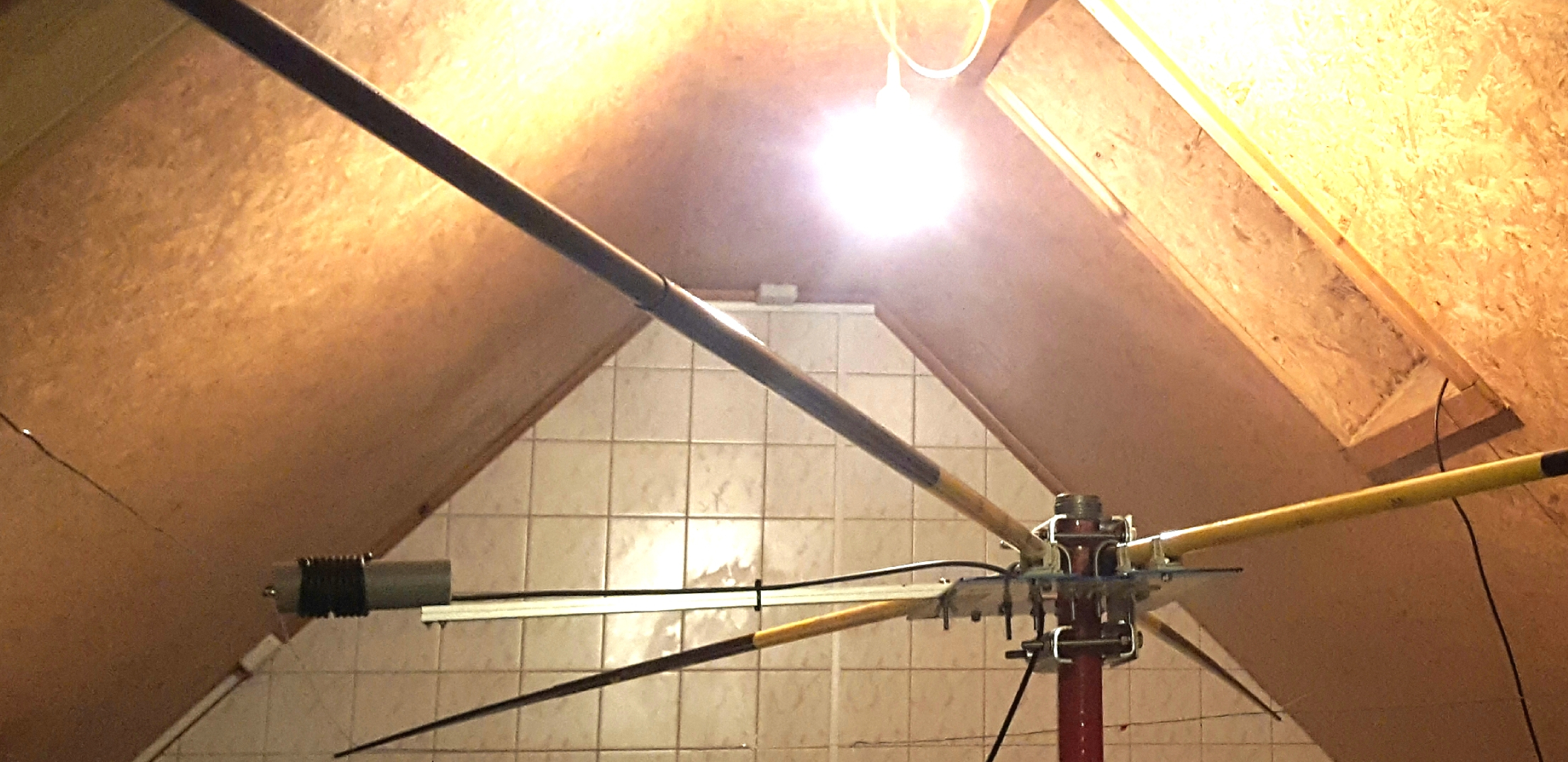
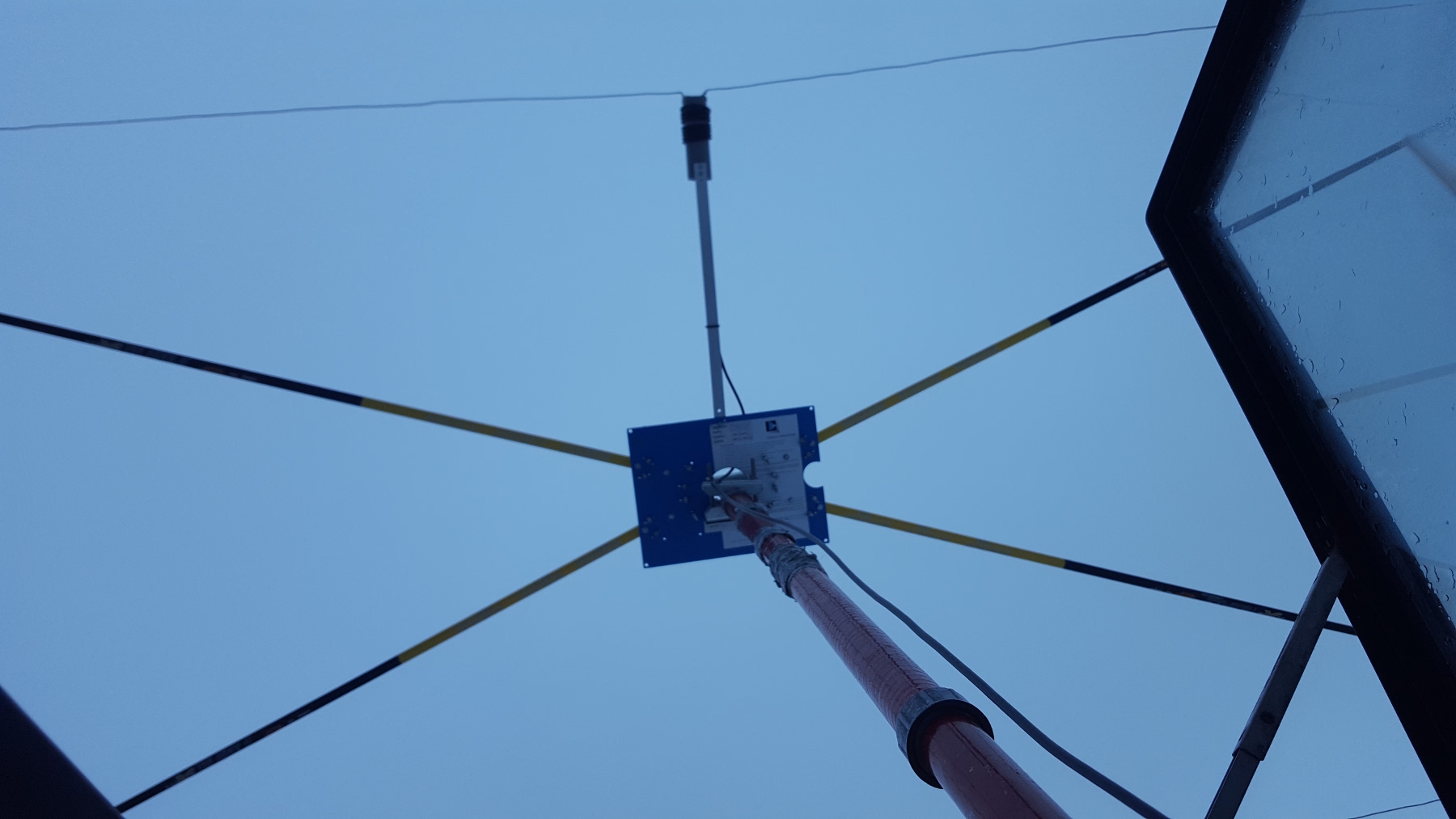
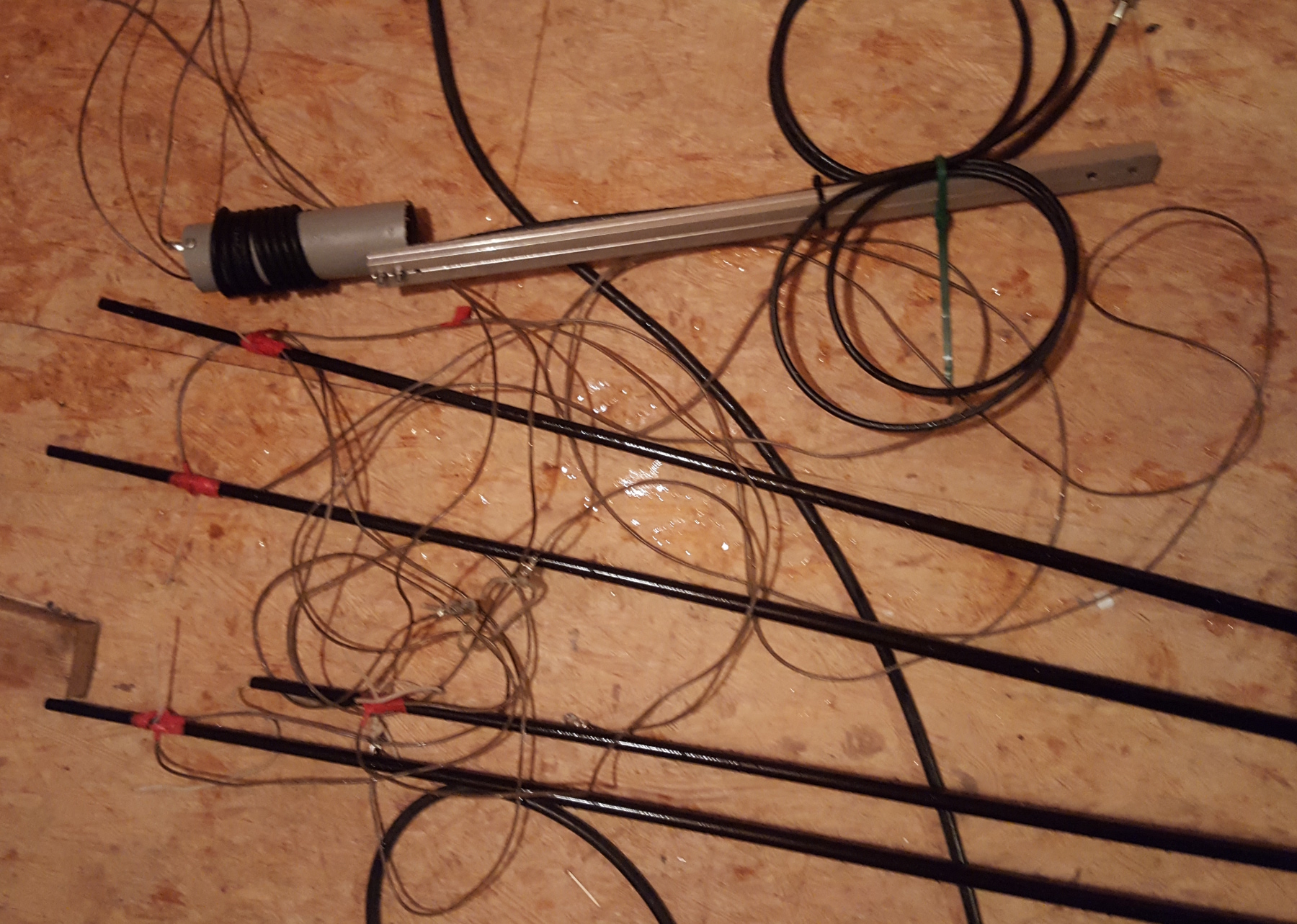
The most heavy part of the moxon is the mounting plate. The fishing rods are snapped to the plate and then fixed with U brackets. There are 16 wing nuts to fix.

10m moxon antenna under test indoor


Getting the antenna outside is not that easy. It needs to be mounted outside and there was little space because of a chimney nearby.

Moxon antenna mounted outside the roof window


It you do not take care everything will end up in a big mess.

Gordons knot – wires of the moxon


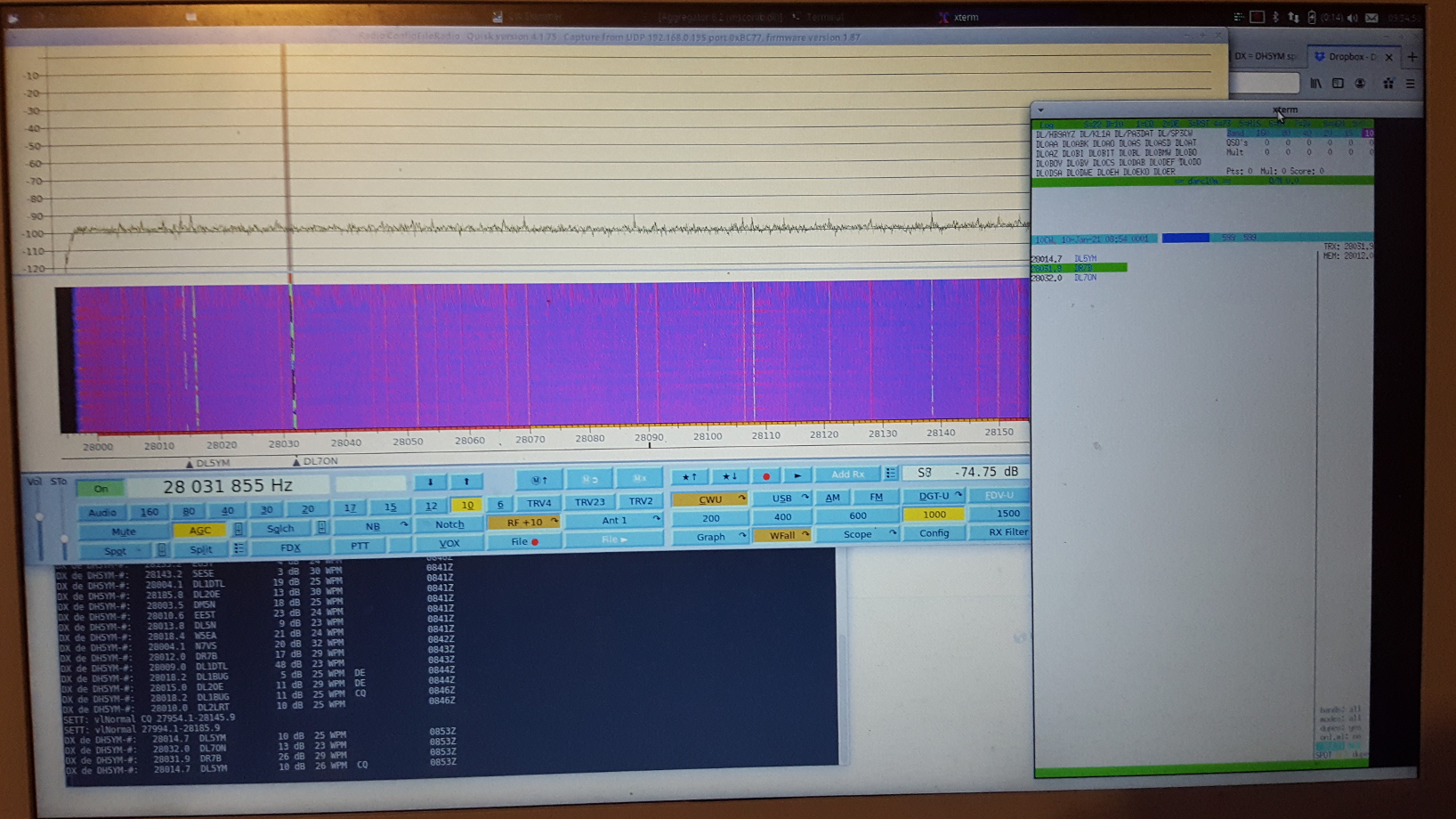
The software did cosist of Quisk, skimmer and tlf log.

SDR software just before the contest


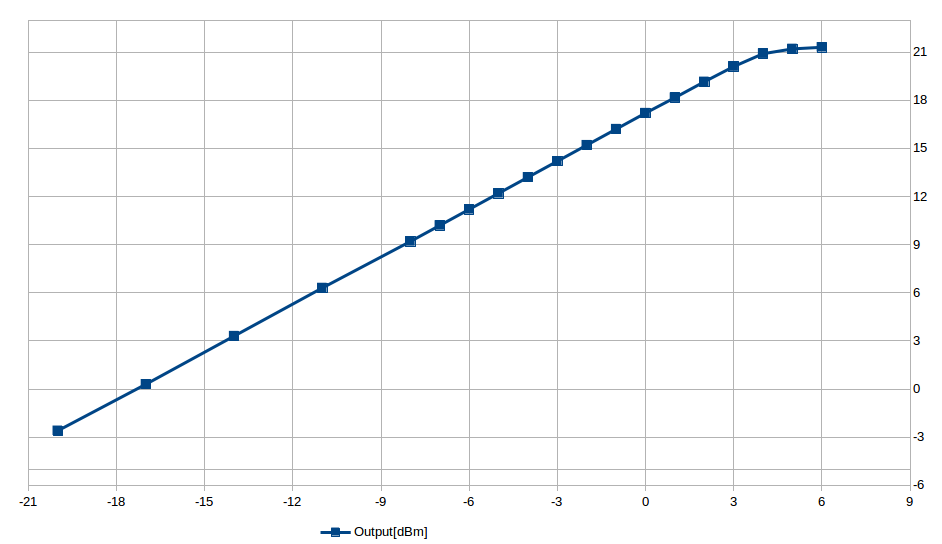
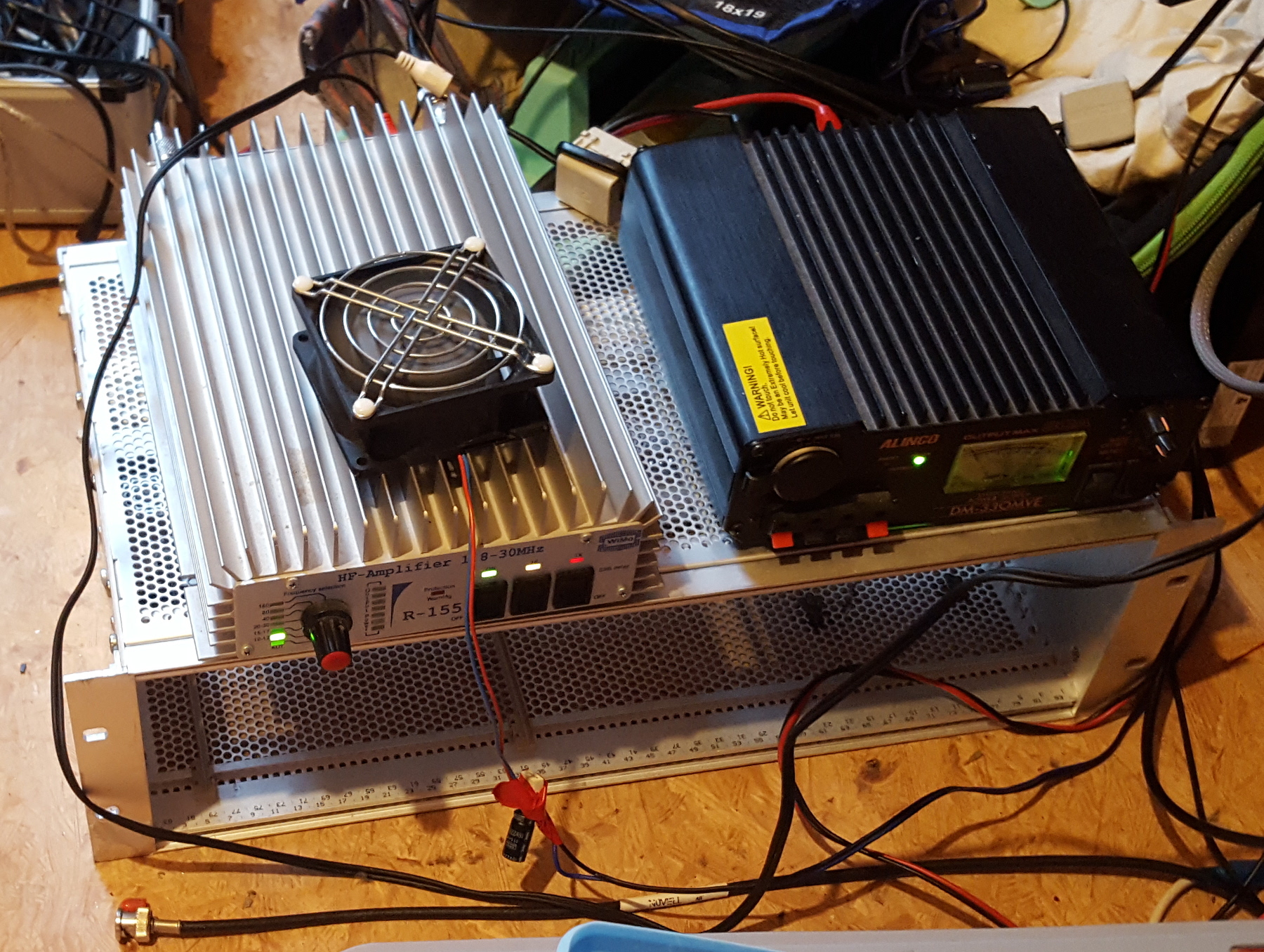
The R155 PA can generate 100W with 5W input. Unfortunately it seems not very robust against some RF nearby. The linear power supply i tried to use before went unstable in SSB. Therefore i had to swap the supplies.

PA and power supply


HiQSDR is quite unsensitive on 10m. I used a LNA from Funkamateur which has bypass relais for TX. I had to replace the transistors because both where faulty.

HiQSDR and preamp

December DUR

The last DUR activity of the year was out of competition due to the new restrictions with respect to Covid-19. Therefore the portable activity was low.
23cm ended with 12QSO and ODX DL1SUZ about 300km. I several times tried with HA8V without any success. Also other signal appeared quite weak. I heard Uwe on 13cm as well. Since i do not use a PA yet (only 1W) i was not able to make a QSO there. 13cm finally had 6 QSO, everything local. On 9cm i was able to reach DL6ABC and DC7QH in Berlin + DL4DTU locally.